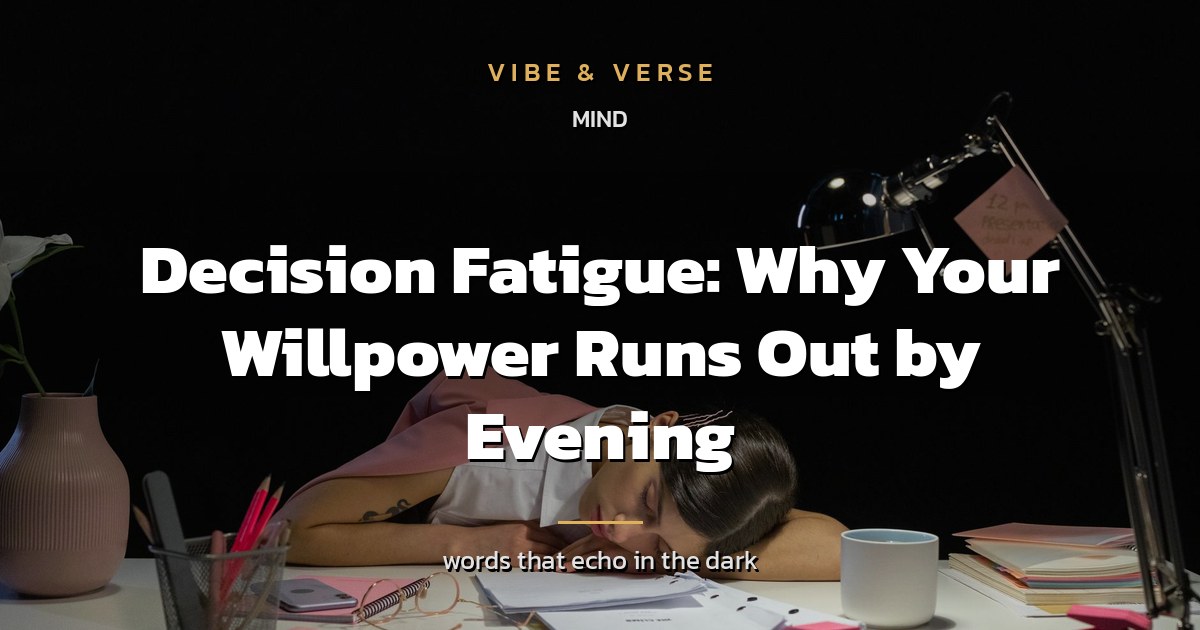
Ever notice that you eat healthy at lunch but raid the fridge at 10 p.m.? That you make smart calls in the morning but impulse-buy in the evening? That's not a lack of character. It's a real psychological phenomenon called decision fatigue — the idea that making choices, all day long, gradually drains your ability to make good ones.
Your Willpower Is a Battery, Not a Trait
We tend to think of self-control as a fixed personality trait: either you have discipline or you don't. But research suggests it behaves more like a battery. Every decision you make — what to wear, what to reply, which task to do first, what to eat — draws a little power from the same mental reserve. By evening, after hundreds of choices, that reserve is running low, and your capacity for careful, disciplined thinking drops.
This is why the same person can be a model of restraint at 9 a.m. and completely undone by a dessert menu at 9 p.m.
What Decision Fatigue Looks Like
When your mental battery is drained, you don't stop making decisions — you start making them badly, in two predictable ways. First, you become impulsive, grabbing whatever is easiest or most tempting right now. Second, you become avoidant, putting off decisions entirely or just defaulting to whatever takes no effort. Both are the mind's way of conserving energy it no longer has.

It shows up in overspending late in a shopping trip, in snapping at loved ones after a demanding day, and in abandoning good intentions once you're tired.
Why the Modern World Makes It Worse
We face more decisions today than humans ever have — endless menus, notifications, options, and open tabs. Every trivial choice, from which show to stream to which email to answer first, taps the same reservoir as the big ones. The sheer volume of small decisions can leave us drained before we even reach the choices that matter.
How to Protect Your Best Thinking
You can't avoid decisions, but you can spend your mental energy more wisely:
- **Make important decisions early.** Tackle your hardest, highest-stakes choices when your battery is full — usually in the morning.
- **Reduce trivial decisions.** Simplify recurring choices: plan meals, lay out clothes, build routines. Every decision you automate saves energy for one that counts. This is why some highly effective people famously wear the same outfit daily.
- **Don't decide important things when depleted.** If you're exhausted, delay major choices until you've rested. "I'll decide in the morning" is often wise, not lazy.
- **Refuel.** Short breaks, food, and rest genuinely restore some capacity for self-control.
The Takeaway
The next time you make a poor choice at the end of a long day, don't just blame your willpower. Recognize it for what it often is: a drained battery, not a broken character. Decision fatigue is real, but it's also manageable. Guard your best decisions for when your mind is fresh, strip away the trivial choices that quietly bleed you dry, and give yourself permission to rest before the choices that truly matter.





Be the first to share a thought.