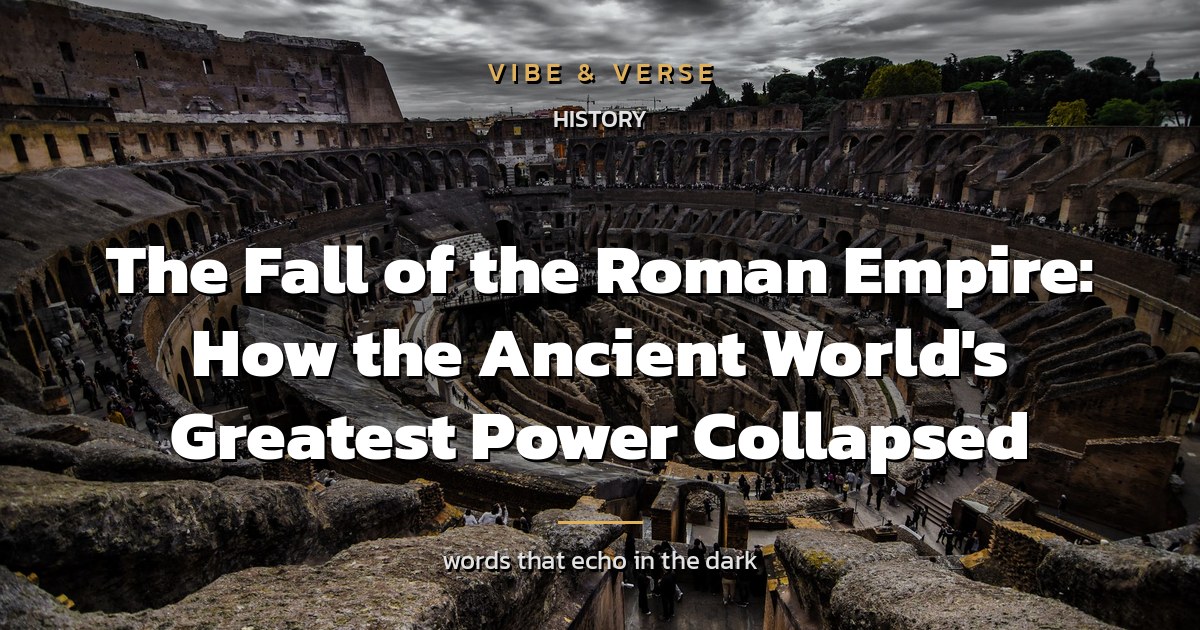
For centuries, the Roman Empire was the dominant power of the ancient world, ruling vast territories across three continents with roads, laws, armies, and cities that shaped civilization for generations. And then, gradually, it fell. The collapse of Rome is one of history's most studied events — not because it happened in a single dramatic moment, but because it didn't. Rome's fall was a slow unraveling, driven by many forces at once. Here's how the greatest empire of antiquity came apart.
Not a Sudden Collapse
First, an important correction: Rome didn't fall overnight. Its decline stretched across a long period, and in many ways it faded rather than crashed. The empire had already split into two halves, and while the western half eventually collapsed, the eastern half endured for many more centuries. When people speak of "the fall of Rome," they usually mean the slow disintegration of the western empire — a process, not an event.
An Empire Too Big to Govern
One of Rome's core problems was its own enormous size. At its height, the empire was so vast that governing and defending it became a monumental challenge. Communication and control across such distances were slow and difficult. Splitting the empire in two was partly an attempt to manage this, but the sheer scale continued to strain Rome's resources and administration, making it harder to respond to threats and crises.
Pressure on the Borders
Throughout its later history, Rome faced increasing pressure from various groups pushing against and across its frontiers. Defending the long borders required huge armies and constant resources. Over time, waves of migrating and invading peoples entered Roman territory, some clashing with Rome and others settling within it. Eventually, the western empire could no longer hold its borders, and its heartlands became vulnerable in ways that would have been unthinkable at Rome's peak.
Trouble From Within
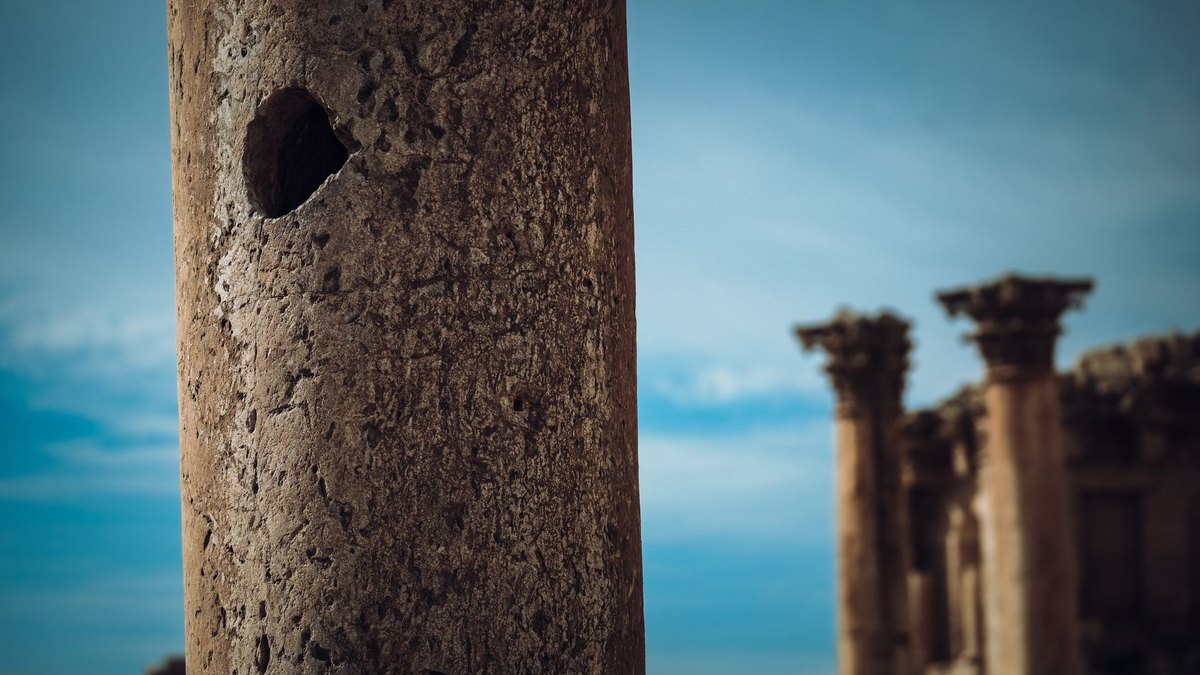
External pressure was only part of the story. Internally, Rome suffered from serious instability. There were frequent struggles for power, with leaders rising and falling, sometimes violently, which weakened consistent governance. Economic difficulties mounted, including financial strain and the immense cost of maintaining the military. Reliance on the labor and structures that had built Roman prosperity became harder to sustain. A society once confident and cohesive grew more fractured and strained.
Many Causes, Not One
Historians have long debated the "real" cause of Rome's fall, proposing everything from military overreach and economic decline to political corruption, social change, and shifting populations. The most convincing answer is that there was no single cause. Rome fell because many pressures — external and internal, sudden and gradual — combined and reinforced one another over a long time. A strong, complex system was slowly worn down until it could no longer hold together in the west.
The Takeaway
The fall of the Roman Empire is less a story of one catastrophe than of gradual exhaustion — a giant slowly overwhelmed by its own size, its enemies, and its internal troubles. It's a powerful reminder that even the mightiest civilizations are not permanent, and that decline often comes not from a single blow but from many strains accumulating over time. Rome's long unraveling continues to fascinate us, because within it lie enduring questions about how great powers rise, endure, and ultimately come to an end.




Be the first to share a thought.