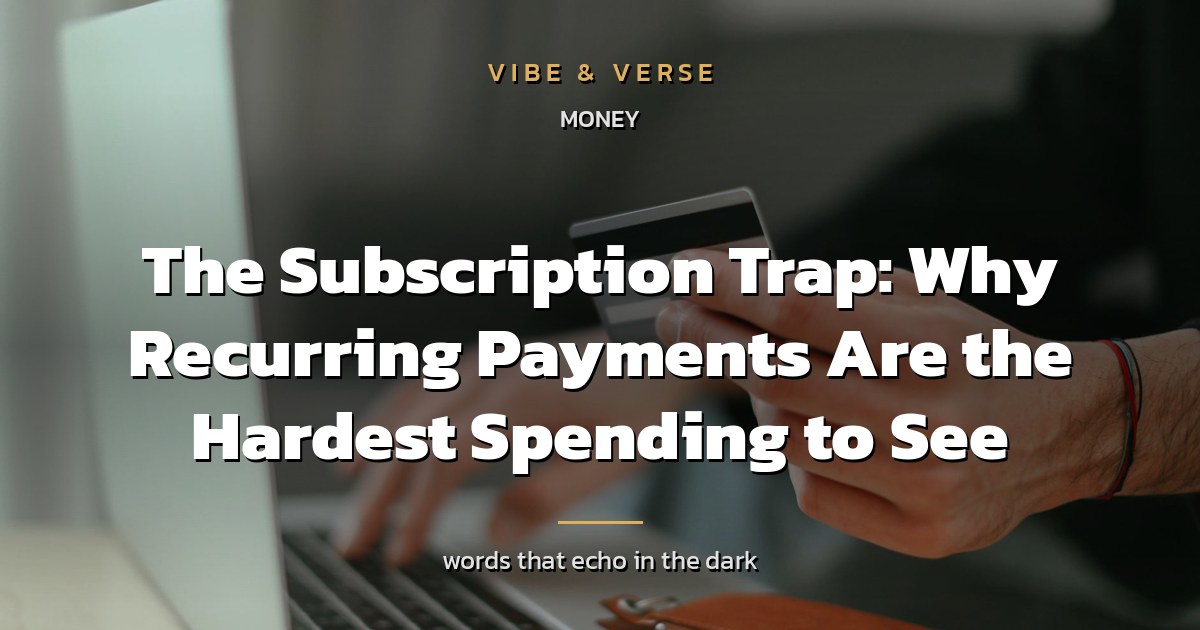
Ask someone how much they spend on subscriptions each month and they will give you a number. Then ask them to open their bank statement and count. The second number is almost always higher — frequently by a factor of two or three.
This is not carelessness. Recurring billing is engineered to be forgettable, and it exploits several well-documented quirks of human attention at once. Understanding the mechanism is what makes it fixable.
Why the brain loses track
A single decision covers unlimited payments. When you buy a coffee, you decide once and pay once. When you subscribe, you decide once and pay forever. Every subsequent charge inherits the authority of a decision you made in a completely different context, possibly years ago, possibly while you were on a free trial and thought you would cancel.
Small amounts fall below the notice threshold. A charge of 9.99 does not trigger the mild discomfort that a charge of 120 does, even though twelve of the former is the latter. Economists call this the peanuts effect: we evaluate amounts in isolation rather than in aggregate.
There is no moment of payment. Handing over cash creates what researchers call the pain of paying. A card tap dulls it. An automatic debit removes it entirely — the money leaves while you are asleep. No pain, no memory, no review.
Default bias does the rest. Continuing requires nothing. Cancelling requires finding the account, remembering the password, navigating a retention flow, and confirming twice. When doing nothing is free and doing something costs effort, most people do nothing indefinitely.
Sunk cost keeps the corpse warm. "I've paid for it for two years, I should really start using it" is the exact reasoning that guarantees a third year.
The design choices that are not accidents
Some of this is genuine convenience. Some of it is deliberate.
- Free trials that require a card up front and convert silently
- Cancellation flows several layers deeper than sign-up flows
- Annual renewals charged without a meaningful reminder
- Price rises announced in an email that reads like a product update
- "Pause" offered prominently and "cancel" hidden below it
- Apps that let you subscribe in one tap but require a website to unsubscribe
Regulators in several countries have started requiring that cancelling be as easy as subscribing, precisely because the asymmetry was so profitable.
Doing the audit
This takes one afternoon and is usually the highest-return hour of financial work available to an ordinary household.
Step 1: Get a full year of statements. A month is not enough — annual subscriptions will be invisible. Pull twelve months from every card and bank account, including any card you rarely use, and any account linked to a payment app.
Step 2: Highlight every repeating merchant. Look for the same name appearing at regular intervals. Watch for charges from payment processors rather than the service itself; a line item may not carry the name of the company you signed up with.
Step 3: Write the annual figure, not the monthly one. Multiply every monthly charge by twelve before judging it. "12 a month" and "144 a year for something I opened twice" produce very different reactions, which is exactly why the monthly framing is used in marketing.
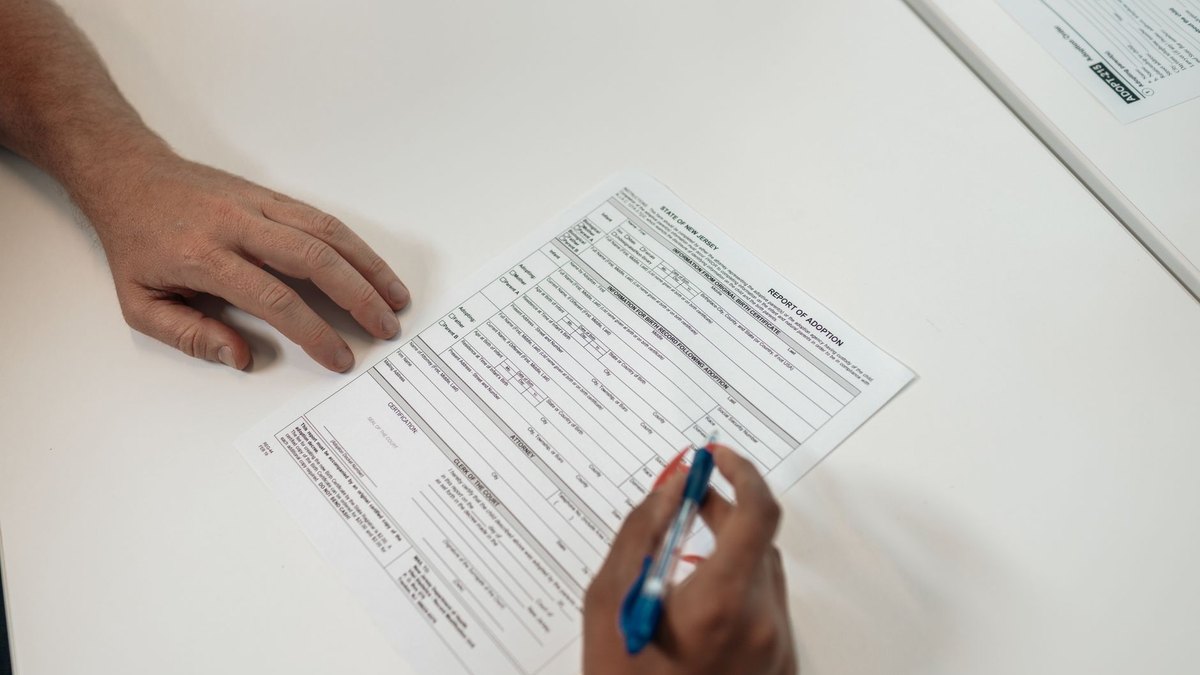
Step 4: Sort into three piles.
- Use regularly and would pay again today
- Use occasionally — could be seasonal instead of permanent
- Have not opened in three months
Step 5: Cancel the third pile immediately. Not later. Later is how it got there.
Step 6: Check for duplicates. Households routinely pay for two cloud storage plans, three streaming services with overlapping catalogues, two password managers, or a service that comes bundled free with something else they already pay for.
The rules that keep it from coming back
One in, one out. New subscription requires cancelling an existing one. Crude, but it forces the comparison that never otherwise happens.
Use a calendar, not a memory. When you start a free trial, put the cancellation date in your calendar the same minute, one or two days before it converts.
Pay annually only for things you have already used for a year. Annual plans are cheaper per month and far easier to forget. Earn them.
Keep subscriptions on one card. A single statement page becomes a complete inventory, and the review takes minutes instead of hours.
Treat every price rise as a new decision. When a service raises its price, you have not been charged more for something you agreed to — you have been offered a different deal. Decide again.
Seasonal, not permanent. Subscribe to the sports service during the season. Subscribe to the streaming service for the month you actually want to watch the thing. Cancel afterwards. Re-subscribing takes ninety seconds and there is no penalty for having left.
Watch the ones that are not called subscriptions. Extended warranties, app add-ons, in-game passes, gym memberships, insurance riders, cloud storage upgrades, premium tiers on services whose free tier you used happily for years.
The number that usually surprises people
Do the arithmetic on what the audit recovers. Cancelling 60 a month is 720 a year. Invested at a modest real return over twenty years, that recurring amount becomes a five-figure sum — from cancelling things nobody was using.
That framing matters more than the monthly saving, because it reveals what the subscription was actually costing: not 9.99, but 9.99 plus everything that money would have become.
The short version
Subscriptions escape attention because they are small, automatic, painless, and default-on. The fix is not willpower but visibility: pull twelve months of statements, convert every charge to an annual number, cancel anything untouched in three months, and put every future free trial's end date in your calendar before you close the tab.



Be the first to share a thought.