Few kitchen appliances attract as much suspicion as the microwave. It is accused of destroying nutrients, changing the molecular structure of food, leaking radiation and generally producing something less wholesome than the same food cooked on a stove.
The physics does not support most of this, and where nutrient loss is concerned the microwave usually comes out ahead of the methods it is compared with. It is worth walking through why.
What a microwave actually does
A microwave oven produces electromagnetic radiation at a frequency of about 2.45 gigahertz — in the same broad family as radio waves and visible light, and far weaker per photon than either ultraviolet light or X-rays.
Water molecules are polar: slightly positive at one end, slightly negative at the other. The microwave field flips direction billions of times per second, and water molecules try to rotate to follow it. That rotation is friction, and friction is heat.
That is the entire mechanism. The food heats because its own water molecules are being jostled. There is no ionising radiation involved, nothing becomes radioactive, and no chemical bonds are broken by the radiation itself. The frequency used carries far too little energy per photon to knock electrons off atoms, which is the definition of ionising.
So a microwave heats food. Anything a microwave does to nutrients, it does through heat — exactly like every other cooking method.
Why nutrients are lost when cooking, in any appliance
Three things damage nutrients during cooking:
- Heat. Vitamin C and several B vitamins, particularly folate and thiamine, degrade when heated. The higher the temperature and the longer the exposure, the greater the loss.
- Water. Water-soluble vitamins and minerals leach out of the food into the cooking liquid. If you pour that liquid away, the nutrients go with it.
- Time. Longer cooking means more of both effects.
Notice what this list implies. The gentlest cooking method is the one that uses the least time, the lowest effective temperature and the least water.
That describes a microwave rather well.
How the methods compare
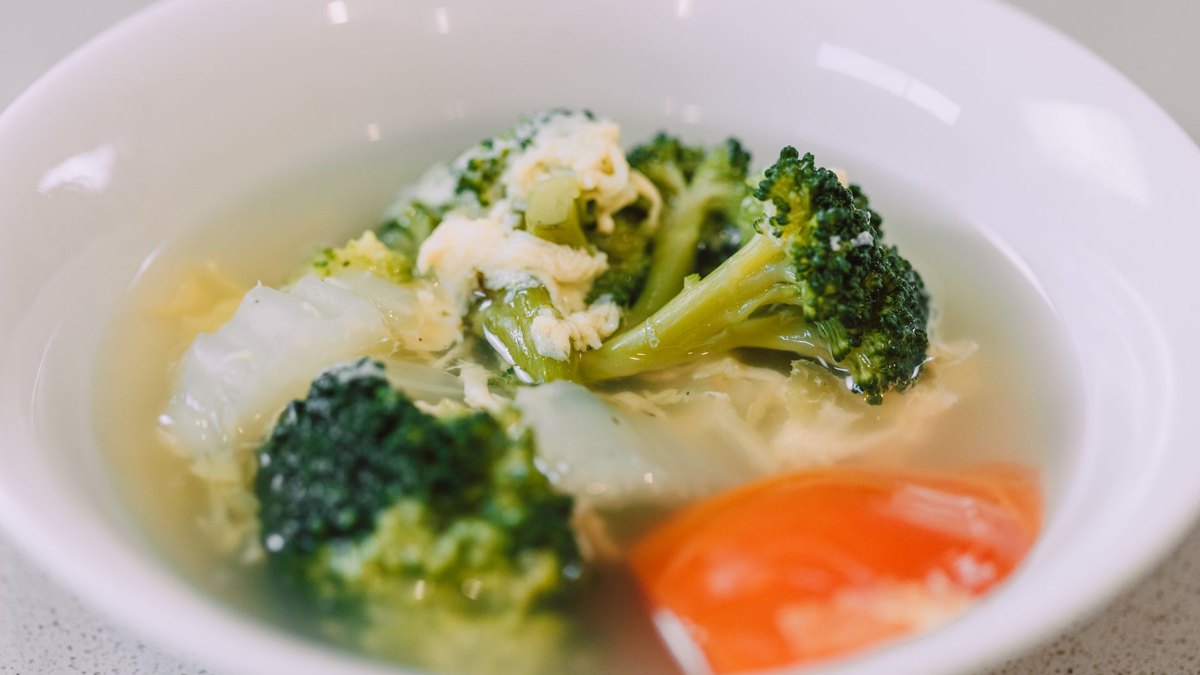
Boiling is consistently the worst method for water-soluble vitamins, and the reason is leaching rather than heat. Boiled broccoli can lose a substantial share of its vitamin C to the water — studies have reported losses in the range of 50 to 80 per cent depending on time and water volume. The vitamin is not destroyed so much as relocated into liquid that most people tip down the sink.
Microwaving with little or no added water performs well precisely because there is nowhere for the vitamins to leach to, and cooking times are short. Several studies have found microwaved vegetables retain vitamin C and other nutrients as well as or better than boiled, and comparably to steaming.
Steaming is the other strong performer, for the same reasons: short time, no immersion.
Frying and roasting involve higher temperatures. They preserve water-soluble vitamins reasonably well because there is no leaching, but high heat degrades some heat-sensitive nutrients and can produce compounds you would rather avoid — acrylamide in starchy foods browned at high temperature, for example.
The honest summary: for vegetables, microwaving and steaming are usually the best options for nutrient retention, and boiling with lots of water then discarding it is the worst.
Some nutrients are unaffected or improved
Not everything is heat-sensitive, and cooking is not universally destructive.
- Minerals — iron, calcium, zinc, potassium — are not destroyed by heat at all. They can only be lost by leaching into discarded water.
- Fibre is essentially unaffected.
- Protein is denatured by cooking, which is usually a benefit: it makes protein easier to digest.
- Lycopene in tomatoes becomes more bioavailable when heated, which is why cooked tomato products are a better source than raw.
- Beta-carotene in carrots is likewise more available after cooking.
For these, cooking method matters little and cooking itself is often a net positive.
The claims that do not hold up
Microwaves change the molecular structure of food. All cooking changes the molecular structure of food. That is what cooking is. There is nothing unique about the changes produced by microwave heating, and studies looking for distinctive chemical products have not found them.
Microwaves make food radioactive. No. The radiation is non-ionising and stops the instant the oven does, in the same way a room stops being lit when you switch off the lamp.
Microwave ovens leak dangerous radiation. Ovens are shielded, with the door mesh acting as a Faraday cage — the holes are far smaller than the wavelength involved, so the microwaves cannot pass through while visible light can. Regulatory limits on leakage are set well below levels associated with harm. A door that no longer closes properly or a damaged seal is a genuine reason to replace an oven.
A widely circulated claim that microwaved water kills plants traces back to a school science fair project, not a published study, and has never been replicated.
The real issues, which are about containers and heating patterns
Two genuine concerns exist, and neither is about nutrients.
Plastic containers. Heating food in plastic that is not intended for microwave use can allow chemicals to migrate into food, and this concern is legitimate. Use glass or ceramic where possible, avoid heating food in takeaway containers or margarine tubs, and do not microwave food in cling film touching the food. Containers labelled microwave-safe have been tested for this purpose.
Uneven heating. Microwaves do not heat uniformly; they produce hot and cold spots, which is why turntables exist. For most food this is a texture problem, but for food safety it matters — cold spots can leave bacteria alive in reheated leftovers or partly cooked meat. Stir food partway through, let it stand for a minute or two so heat equalises, and where safety matters use a thermometer rather than a guess.
Two specific cases are worth naming: never microwave whole eggs in the shell, which can burst, and take care with liquids in very smooth containers, which can superheat past boiling point without visibly bubbling and then boil over violently when disturbed.
Getting the most out of it
- Use as little water as possible — a tablespoon or two is enough to steam most vegetables
- Cover the dish, which traps steam and shortens cooking time
- Cut pieces to a similar size for more even heating
- Stop while vegetables still have some bite; overcooking costs both nutrients and texture
- If you do add water, use the liquid — in a sauce, soup or gravy — rather than pouring it away
- Stir or rotate partway through, and let food rest briefly before eating
Summary
Microwaving does not destroy nutrients in any way unique to microwaves. Nutrient loss during cooking is caused by heat, water and time, and a microwave typically uses less of all three than boiling does.
For vegetables, microwaving with minimal water is among the best methods available for retaining vitamin C and other heat-sensitive nutrients, roughly on par with steaming and clearly better than boiling in a full pan of water that then goes down the drain.
The things actually worth attention are the container you use and whether the food is heated evenly. The appliance itself has been carrying a reputation it did not earn.



Be the first to share a thought.