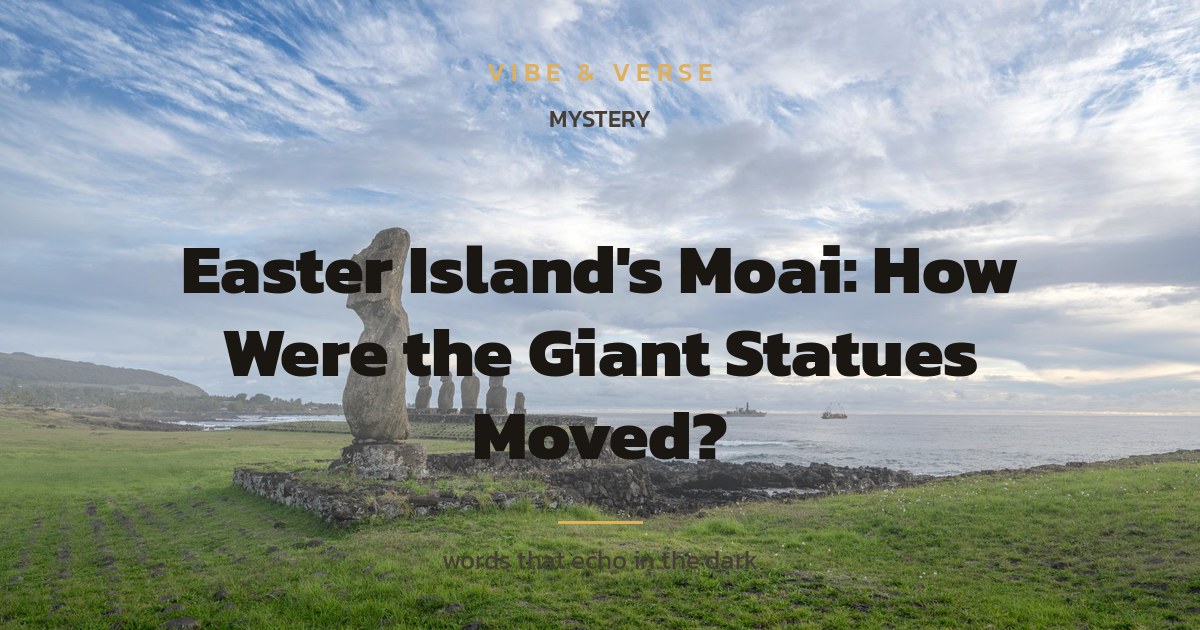
Far out in the South Pacific, on one of the most isolated inhabited islands on Earth, stand nearly a thousand giant stone figures known as moai. Carved centuries ago by the Rapa Nui people, some of these statues stand several meters tall and weigh dozens of tons. For a long time, outsiders couldn't imagine how a society without cranes, metal tools, or wheels could have moved such enormous objects across the island. The mystery of the moai has fascinated explorers, scientists, and dreamers for generations.
Who Built the Moai
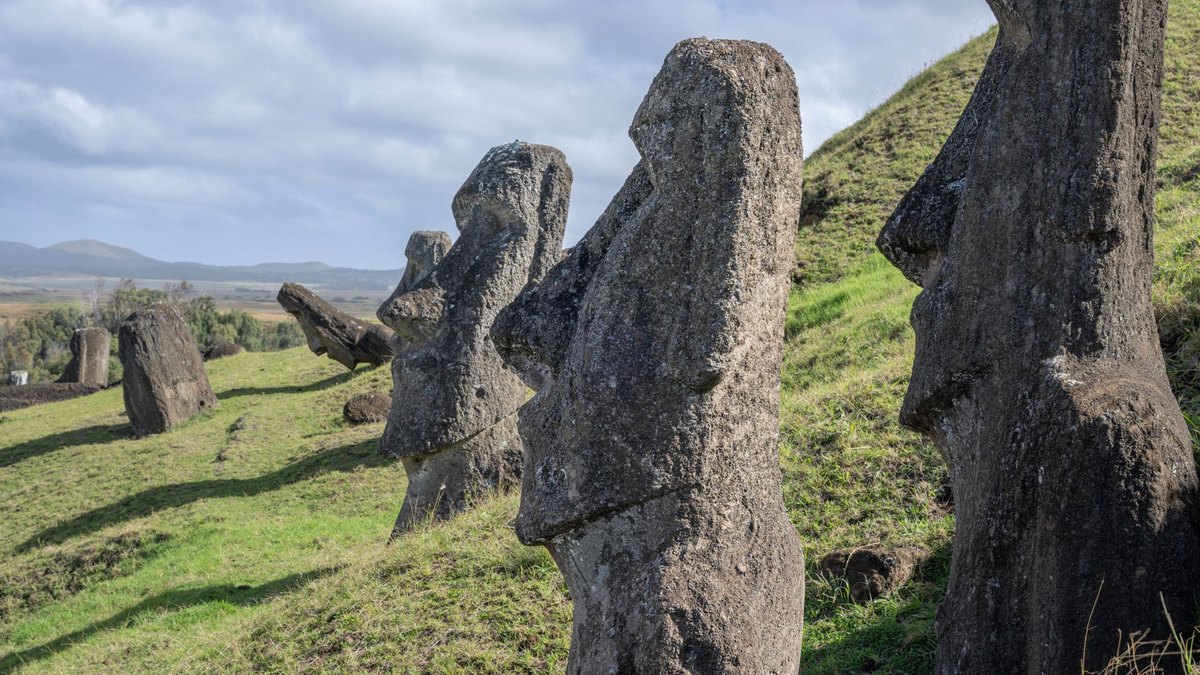
The moai were created by the Rapa Nui, the Polynesian people who settled Easter Island many centuries ago. The statues are believed to represent important ancestors or chiefs, serving as powerful symbols of lineage and spiritual authority. Carved from volcanic rock at a quarry, the figures were then transported to platforms around the island's coast, where they stood watching over the communities that made them. Their creation reflects an impressive, organized society.
The Scale of the Achievement
What makes the moai so astonishing is their size and number. Hundreds were carved and moved, some weighing as much as several elephants. They had to be transported from the quarry, sometimes many kilometers away, across uneven terrain. Achieving this with only human muscle, rope, wood, and ingenuity represents a remarkable feat of engineering and coordination — one that challenges assumptions about what "primitive" tools can accomplish.
The Old Theories
For years, people struggled to explain the transport of the moai, and some outlandish theories emerged — even suggestions of outside help from lost civilizations or visitors. These ideas said more about the doubters than about the Rapa Nui, underestimating the intelligence and capability of the island's people. In reality, the answer lay in clever techniques and a deep understanding of physics that the islanders themselves preserved in their oral traditions.
"The Statues Walked"
Rapa Nui oral history held that the moai "walked" to their destinations. For a long time this was dismissed as legend, but modern researchers took it seriously — and found it may be literally true. Experiments showed that a statue can be "walked" upright by teams pulling ropes attached to it, rocking it side to side so it shuffles forward step by step, much like moving a heavy refrigerator by wobbling it. It's an elegant solution hidden in plain sight.
Testing the Walking Method
To test the idea, researchers built a full-size replica of a moai and had small teams move it using only ropes. By coordinating their pulls to rock the statue back and forth, they successfully "walked" it forward across open ground. The demonstration showed that a relatively small, well-organized group could move a multi-ton statue without wheels or machines — supporting the islanders' own accounts that had been doubted for so long.
A Lesson in Respecting Ancient Knowledge
The moai mystery carries a broader lesson. For centuries, outsiders assumed the Rapa Nui couldn't have moved the statues themselves, when the truth was that they had mastered a clever technique all along. Their oral tradition held the answer, waiting to be believed. It's a reminder to respect the ingenuity of ancient peoples rather than underestimate them, and to take traditional knowledge seriously.
The Bottom Line
Easter Island's moai are nearly a thousand giant stone figures carved and moved by the Rapa Nui people using only human ingenuity. The long-standing mystery of how they were transported appears to be answered by the islanders' own tradition — that the statues "walked," rocked forward step by step with ropes. Modern experiments confirmed it works. The moai stand today as a testament to human creativity, coordination, and the wisdom preserved in the stories of those who built them.





Be the first to share a thought.