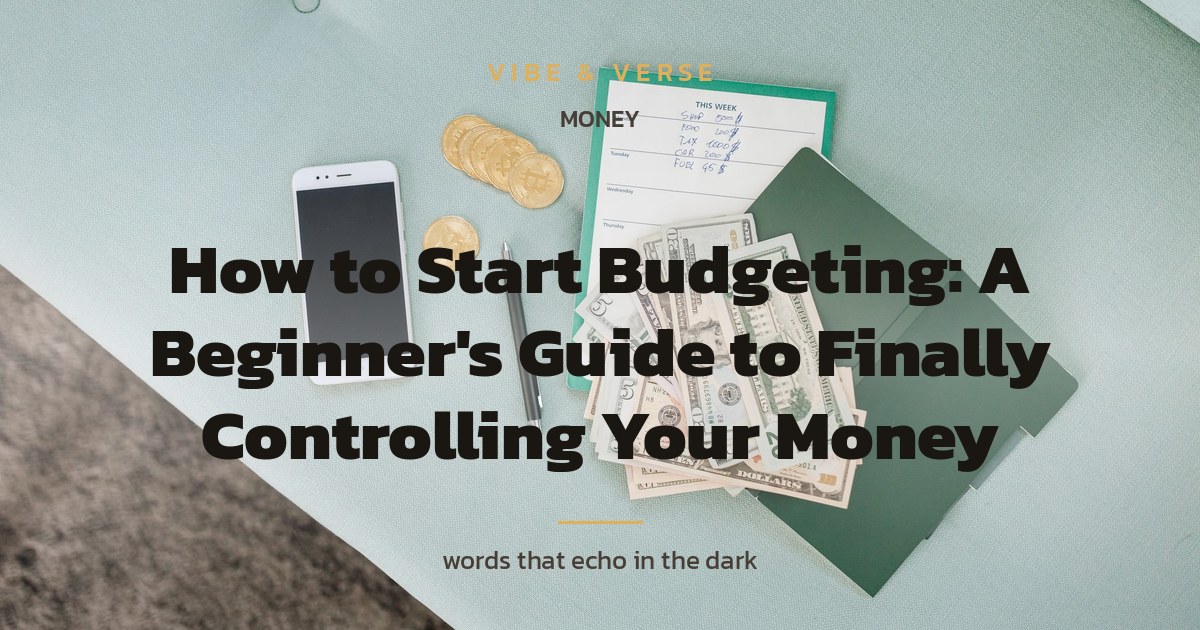
For a lot of people, money feels like water slipping through their fingers. It comes in, it goes out, and by the end of the month there's nothing left — and no clear idea where it all went. A budget is the simplest, most powerful tool to fix this. It's not about restriction or spreadsheets that make you miserable; it's about finally telling your money where to go instead of wondering where it went. Here's how to start.
What a Budget Really Is
Forget the idea that a budget is a punishment. A budget is simply a plan for your money — a way to make sure the things that matter most to you actually get funded. Done right, it doesn't make you feel poorer; it makes you feel in control, because you stop spending blindly and start spending on purpose. That shift in feeling is the whole point.
Step 1: Know What's Coming In
Start with your income — the actual amount that lands in your account after taxes. This is the foundation of your entire budget. If your income varies, use a conservative estimate based on a typical or lower month, so your plan holds up even when earnings dip.
Step 2: Track Where It's Going
Before you can plan, you need to see the truth. For a few weeks, track every expense — every coffee, subscription, and impulse buy. Most people are genuinely shocked by what they find, especially the small, frequent purchases that quietly add up. You can't fix a leak you can't see, and this step reveals exactly where your money is really going.
Step 3: Try a Simple Framework
You don't need a complicated system. A popular starting point is the 50/30/20 approach: roughly half your income for needs (housing, food, bills), thirty percent for wants (fun, dining, hobbies), and twenty percent for savings and paying off debt. It's not sacred — adjust the numbers to your life — but it gives beginners a clear, memorable structure instead of a blank page.

Step 4: Pay Yourself First
Here's the habit that changes everything: treat savings as a bill you pay before anything else. The moment income arrives, move a set amount into savings automatically, rather than hoping something is left over at the end. What's left over is almost always nothing. Automating this one step quietly builds wealth without relying on willpower.
Step 5: Expect to Adjust
Your first budget will be wrong, and that's completely normal. You'll underestimate some costs and forget others. A budget isn't a one-time document you carve in stone — it's a living plan you tweak each month as you learn your real patterns. Don't abandon it because it wasn't perfect; refine it.
Common Mistakes to Avoid
Beginners often make budgets so strict they're impossible to keep, then give up entirely. Leave room for enjoyment, or you'll rebel against your own plan. Others forget irregular expenses — annual fees, gifts, repairs — and get derailed when they hit. Set aside a little each month for these so they don't blow up your budget when they arrive.
The Takeaway
Budgeting isn't about depriving yourself; it's about awareness and intention. Once you know what's coming in, where it's going, and where you want it to go, money stops feeling like a mystery and starts feeling like a tool you control. Start simple, expect to adjust, and be kind to yourself as you learn. The goal isn't a perfect spreadsheet — it's the quiet confidence of finally being in charge of your own money.




Be the first to share a thought.