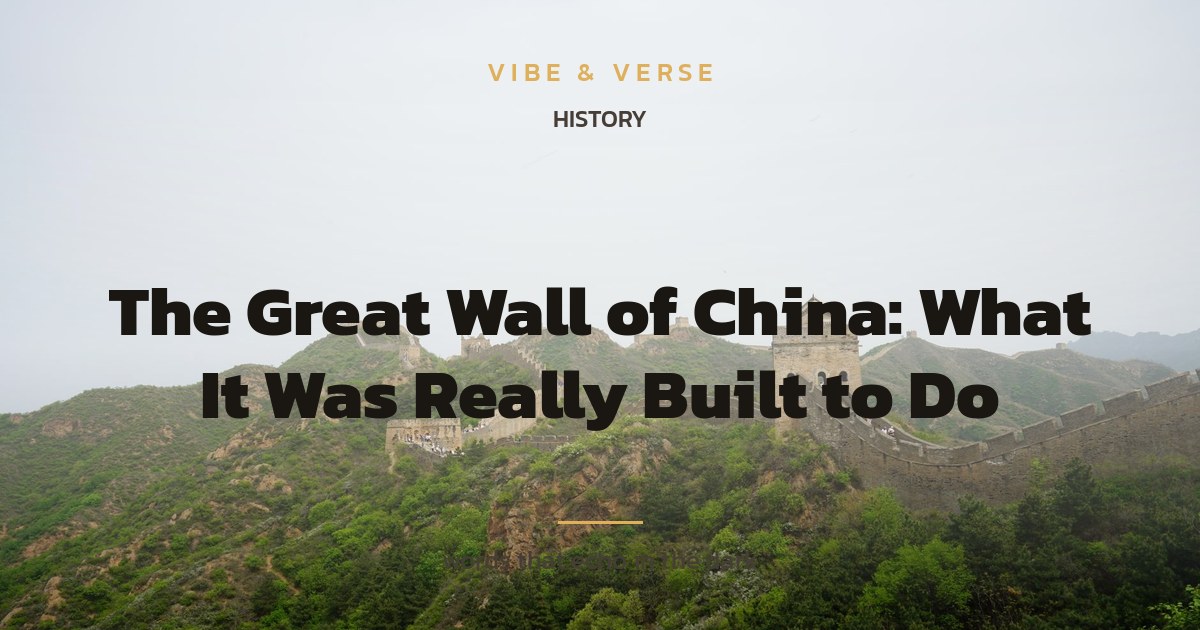
The Great Wall of China stretches across thousands of kilometers of rugged terrain and ranks among the most recognizable human-made structures in the world. Yet much of what people think they know about it is wrong. It wasn't built all at once, it can't actually be seen from space with the naked eye, and it wasn't a single continuous barrier. The true history of the Great Wall is more complex — and more fascinating — than the myths. Here's what it was really built to do.
Not One Wall, but Many
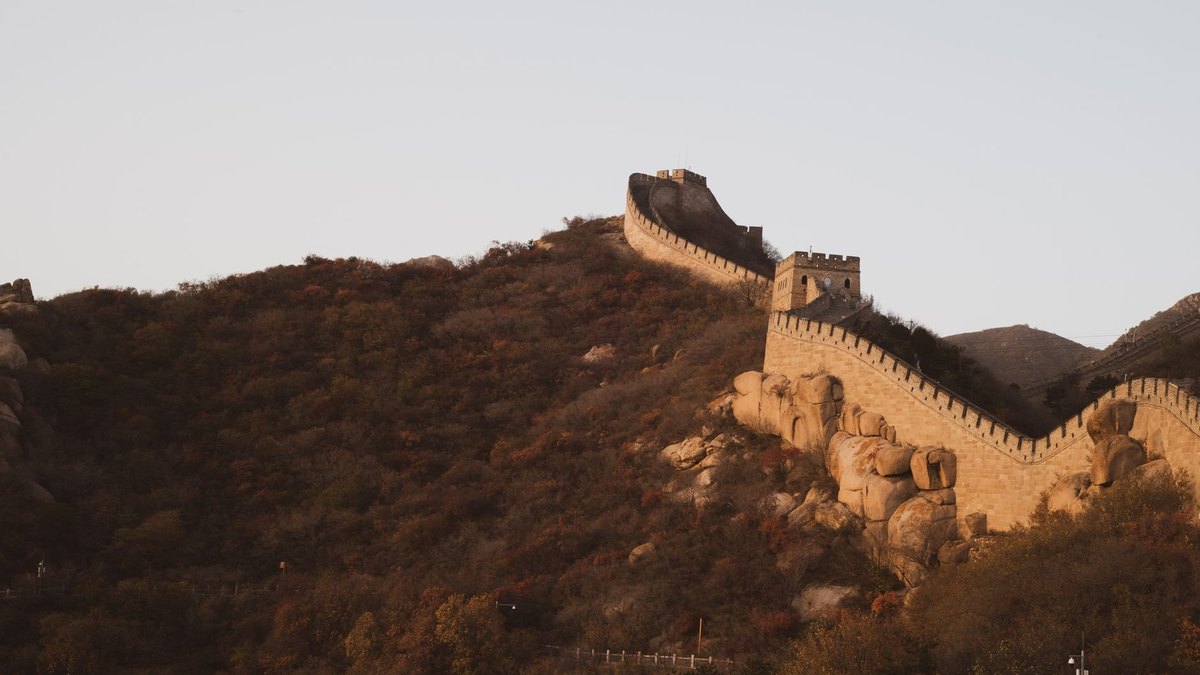
The Great Wall isn't a single structure built in one go. It's a collection of walls, fortifications, and barriers constructed by different Chinese dynasties over many centuries. Early walls were built by separate states long before China was unified, and later rulers connected, rebuilt, and extended them. What we call the Great Wall today is the sum of these efforts across more than a thousand years, made of varied materials from packed earth to stone and brick.
The Main Purpose: Defense
The primary reason for the wall was defense against nomadic peoples from the north. Mounted raiders could strike quickly across the frontier, and the wall was meant to slow them down, block easy passage, and give defenders time to respond. Rather than being an impenetrable barrier, it functioned as a way to control movement and make large-scale invasions more difficult, channeling attackers toward defended points.
More Than a Barrier
The wall was also a system, not just a physical obstacle. It included watchtowers, garrison stations, and beacon towers used to send signals over long distances using smoke or fire. This allowed guards to communicate warnings across vast stretches of frontier remarkably quickly. In this way, the wall served as an early warning network and a means of managing the border, not merely a stone barricade.
Controlling Trade and Movement
Beyond military defense, the wall helped regulate the movement of people and goods. It allowed authorities to monitor trade routes, collect taxes, and control who crossed the frontier. Along parts of the famous Silk Road, the wall and its gates played a role in managing commerce between China and the lands to the west. It was as much a tool of administration as of war.
The Human Cost
Building the wall was a monumental undertaking that came at a tremendous human cost. Vast numbers of soldiers, peasants, and prisoners labored under harsh conditions to construct it, and many died in the process. The wall stands as a symbol of both the power and ambition of imperial China and the immense human effort — and suffering — behind such grand projects. Its grandeur is inseparable from the lives it consumed.
Busting the "Visible From Space" Myth
One of the most repeated claims is that the Great Wall is the only human-made object visible from space with the naked eye. This is simply false. The wall is long but narrow, and it blends in with the surrounding landscape, making it essentially impossible to pick out with the unaided eye from orbit. The myth is a testament to the wall's fame rather than its actual visibility from above.
The Bottom Line
The Great Wall of China was not a single wall but a vast, evolving system of fortifications built over centuries, mainly to defend against northern raiders, manage the frontier, and control trade. It relied on watchtowers and signal networks as much as stone, and it was built at an enormous human cost. Stripping away the myths reveals something even more impressive: a centuries-long project that shaped the history of one of the world's great civilizations.


Be the first to share a thought.