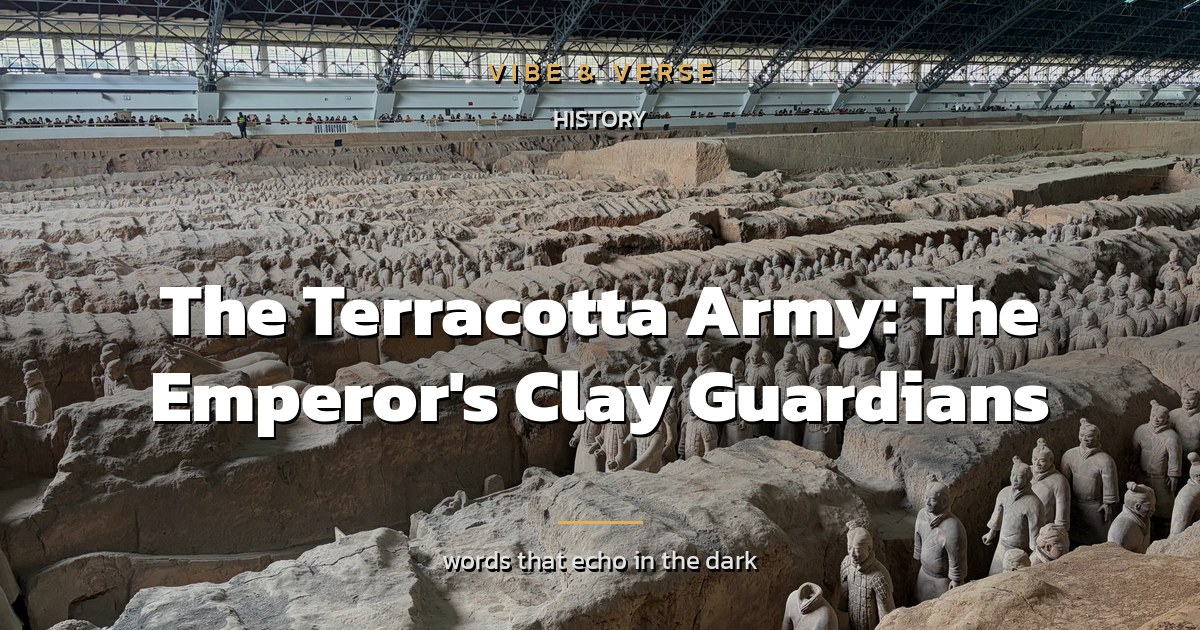
In 1974, farmers digging a well in central China stumbled upon fragments of clay that would lead to one of the greatest archaeological discoveries in history: the Terracotta Army. Buried for more than two thousand years, thousands of life-size clay soldiers stood in silent formation, built to guard China's first emperor in the afterlife. The scale, artistry, and purpose of this hidden army offer a stunning window into the ambitions of one of history's most powerful rulers.
The Emperor Who Ordered It
The Terracotta Army was created for Qin Shi Huang, the first emperor to unify China. He was a ruler of enormous ambition who standardized writing, currency, and measurements, and began major projects including early sections of the Great Wall. Obsessed with power and, according to accounts, with immortality, he ordered the construction of an immense tomb complex — with the clay army as its guardians for the world beyond death.
An Army for the Afterlife
Ancient beliefs held that the afterlife mirrored the living world, and that a ruler would need his power and protection to continue after death. Rather than sacrificing real soldiers, the emperor had an entire army recreated in clay to accompany and defend him eternally. This vast force of warriors, along with horses and chariots, was meant to serve him in the afterlife just as living soldiers had served him in life.
The Staggering Scale
The Terracotta Army is thought to include thousands of soldiers, arranged in battle formation across massive underground pits. Alongside the infantry are archers, cavalry, chariots, and officers, forming a complete military array. The effort required to produce and arrange so many figures was immense, involving huge numbers of craftsmen and laborers. The scale reflects both the emperor's resources and the seriousness with which he prepared for eternity.
Every Face Is Different
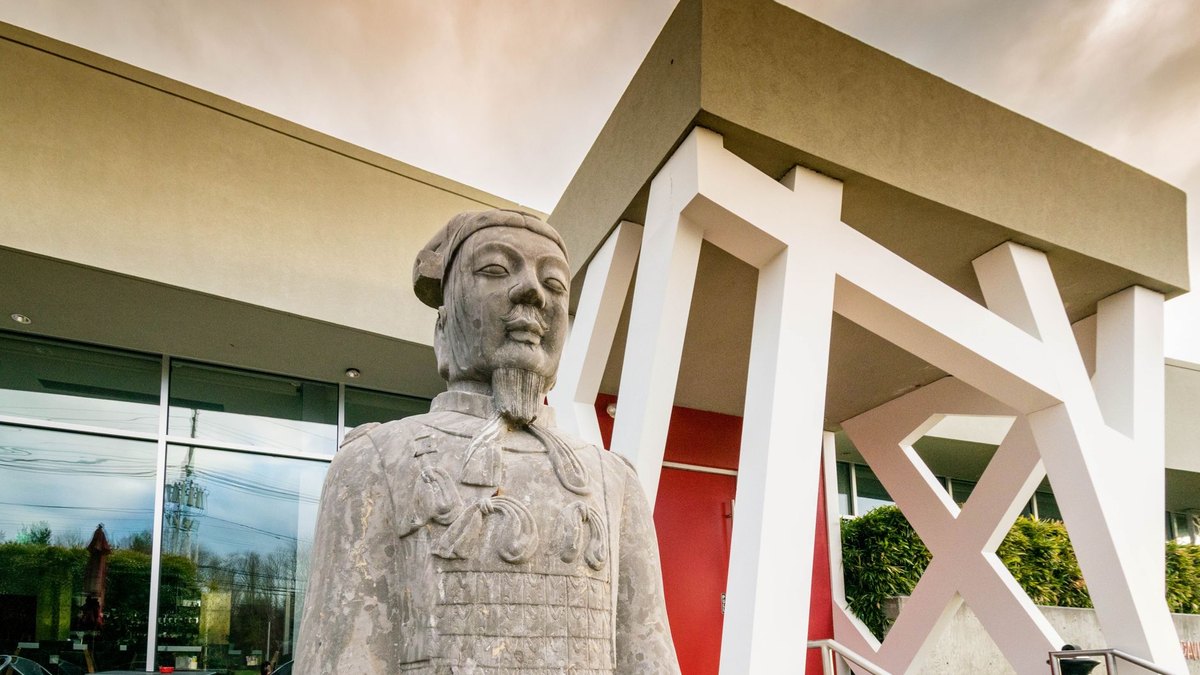
One of the most astonishing features of the army is its individuality. The soldiers were crafted with remarkably varied faces, hairstyles, and expressions, so that no two look exactly alike. They also vary in rank, uniform, and posture. This attention to detail suggests the artisans aimed for a lifelike, realistic force rather than identical copies — a level of craftsmanship that continues to amaze visitors and researchers today.
Once Painted in Bright Colors
Though the figures appear earthy gray-brown today, they were originally painted in vivid colors, giving the army a strikingly lifelike appearance. Unfortunately, much of the pigment flaked away soon after excavation when exposed to air. This has led archaeologists to leave large portions of the tomb complex unexcavated, waiting until preservation techniques improve so that future discoveries can be protected from the same fate.
A Discovery Still Unfolding
The Terracotta Army is only part of a vast tomb complex, much of which remains unexplored. The emperor's actual burial mound has not been fully excavated, partly out of respect and partly due to the challenges of preserving what lies inside. Ongoing research continues to reveal new figures and details, meaning this ancient wonder still holds secrets that may take generations to fully uncover.
The Bottom Line
The Terracotta Army is a vast collection of life-size clay soldiers built to guard China's first emperor, Qin Shi Huang, in the afterlife. Discovered by chance in 1974, its thousands of uniquely detailed warriors reveal the emperor's staggering ambition and the extraordinary skill of ancient craftsmen. More than two thousand years later, it remains one of the world's most remarkable archaeological treasures — and a powerful reminder of humanity's timeless desire to defy death.



Be the first to share a thought.