In a quiet, sparsely populated valley in central Norway called Hessdalen, something strange lights up the sky. For decades, residents and researchers have witnessed glowing orbs of light — white, yellow, sometimes red — that hover, drift, and dart across the valley, occasionally lingering for more than an hour. Unlike most tales of mysterious lights, these have been studied seriously by scientists for years. And yet, they remain only partly explained.
What People See
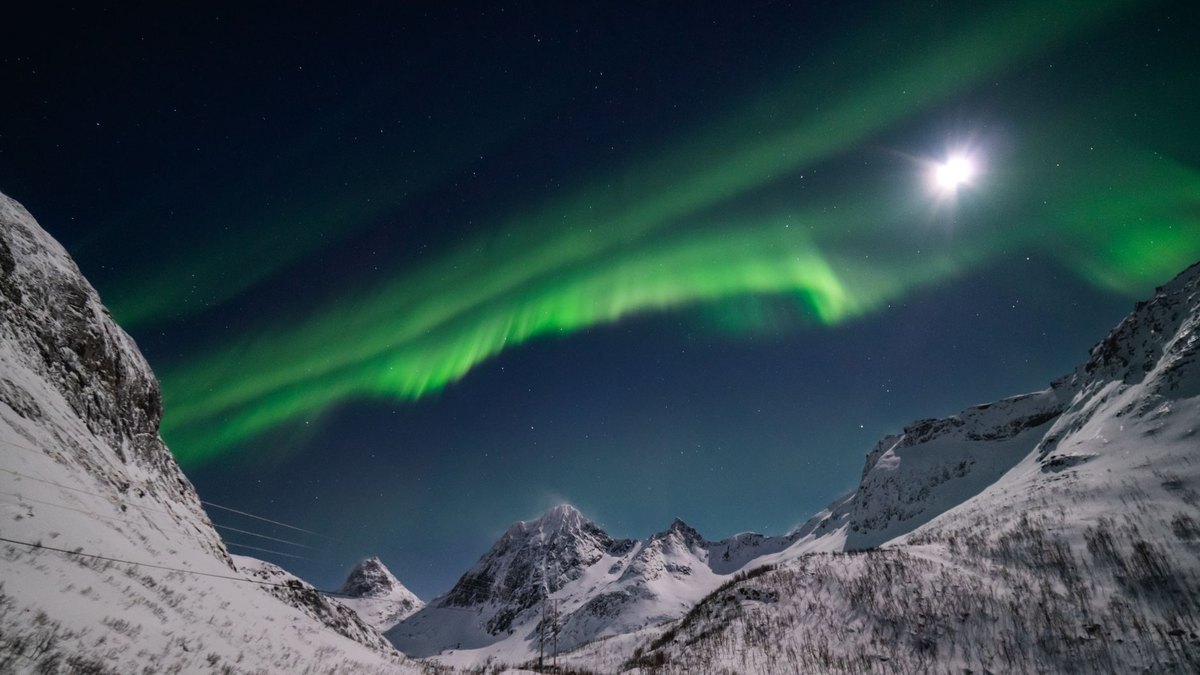
The Hessdalen Lights take several forms. Sometimes they appear as bright, glowing spheres floating slowly above the ground or the ridgelines. Sometimes they flash quickly and vanish. They can be small points or large, brilliant balls of light. Witnesses describe them moving in ways that seem deliberate — hovering, changing direction, speeding up — though this may simply be how our eyes interpret an unfamiliar phenomenon against a dark sky.
The sightings became especially frequent in the early 1980s, when the lights were reported many times a week, drawing widespread attention and prompting serious investigation.
Science Steps In
What sets Hessdalen apart from typical "mystery light" stories is that scientists didn't dismiss it — they set up shop. Researchers installed instruments in the valley: cameras, radar, magnetic sensors, and spectrum analyzers, all aimed at capturing and measuring the lights. This ongoing monitoring has confirmed that something real is happening. The lights are not merely misidentified stars or hoaxes; instruments have recorded genuine luminous phenomena and unusual readings.
Possible Explanations
Several natural theories have been proposed. One leading idea involves ionized gas, or plasma — glowing clouds of charged particles that could form under the right conditions. Another points to the valley's unusual geology and minerals, suggesting that natural electrical or chemical processes in the ground and air might generate the glow. Some researchers have proposed that dust particles containing certain metals could burn or react in the atmosphere, producing light.
There's even a theory that the valley acts like a giant natural battery, with different minerals on either side creating electrical activity. But no single explanation accounts for everything observed, and the phenomenon likely involves more than one process.
A Genuine Scientific Puzzle
What makes Hessdalen compelling is precisely that it hasn't been wrapped up neatly. It's not a story that collapses under investigation — it's one that has survived it. Decades of measurement have deepened the mystery rather than dissolved it, giving scientists real data about a phenomenon they still can't completely explain. That's rare, and it's what keeps researchers coming back.
The Takeaway
The Hessdalen Lights are a reminder that genuine mysteries still exist in the natural world — not everything strange in the sky is a hoax or a hallucination. Here is a phenomenon witnessed by many, recorded by instruments, and studied by scientists, that nonetheless resists a full explanation. Somewhere in that Norwegian valley, nature is doing something we don't yet understand, glowing quietly in the dark and waiting for us to catch up.


Be the first to share a thought.