At around 9:14 p.m. on 22 November 1987, the sports anchor at WGN-TV in Chicago was recapping the Bears game when the picture cut out. For about 25 seconds, viewers saw a figure in a rubber mask standing in front of a sheet of corrugated metal, rocking back and forth. There was no intelligible audio — only a harsh buzzing.
Then the station's engineers changed the frequency of their studio-transmitter link, and the anchor returned, visibly confused. "Well," he said, "if you're wondering what happened, so am I."
Two hours later, it happened again — and the second time, the intruder had sound.
What people saw
The second intrusion hit WTTW, Chicago's public television station, at about 11:15 p.m., during an episode of Doctor Who. This one ran roughly 90 seconds and went out uninterrupted, because WTTW's transmitter was on an unstaffed tower and there was no engineer present to cut it off.
The figure wore a mask of Max Headroom, the computer-generated-looking television character who was ubiquitous in 1987 — the face of a Coca-Cola campaign and a Channel 4 show. Behind him, a rotating sheet of corrugated metal mimicked the character's signature moving-lines background.
What followed was largely nonsense: distorted laughter, a reference to a rival newscaster, a hummed jingle, a Coke can held to the camera, complaints about a video game, and a claim to be a "masterpiece." It ended with the person bent over while a second figure in a maid's outfit struck him with a flyswatter. Then the broadcast returned to Doctor Who mid-scene.
Almost nothing in it made sense, and that is precisely why it stayed in people's heads.
How it was technically possible
This part is well understood. In 1987, most stations relayed their programming from the studio to the transmitter over a microwave link — a directional signal beamed across the city.
That link was not encrypted, and it was not authenticated. Whoever controlled the strongest signal reaching the transmitter's receiver won.
An intruder with the right equipment — a microwave dish, a transmitter, a signal generator, and enough understanding of the frequencies involved — could park somewhere with line of sight, aim at the receiving antenna, and simply overpower the legitimate feed. It required real equipment and real expertise, but nothing exotic to a working broadcast engineer.
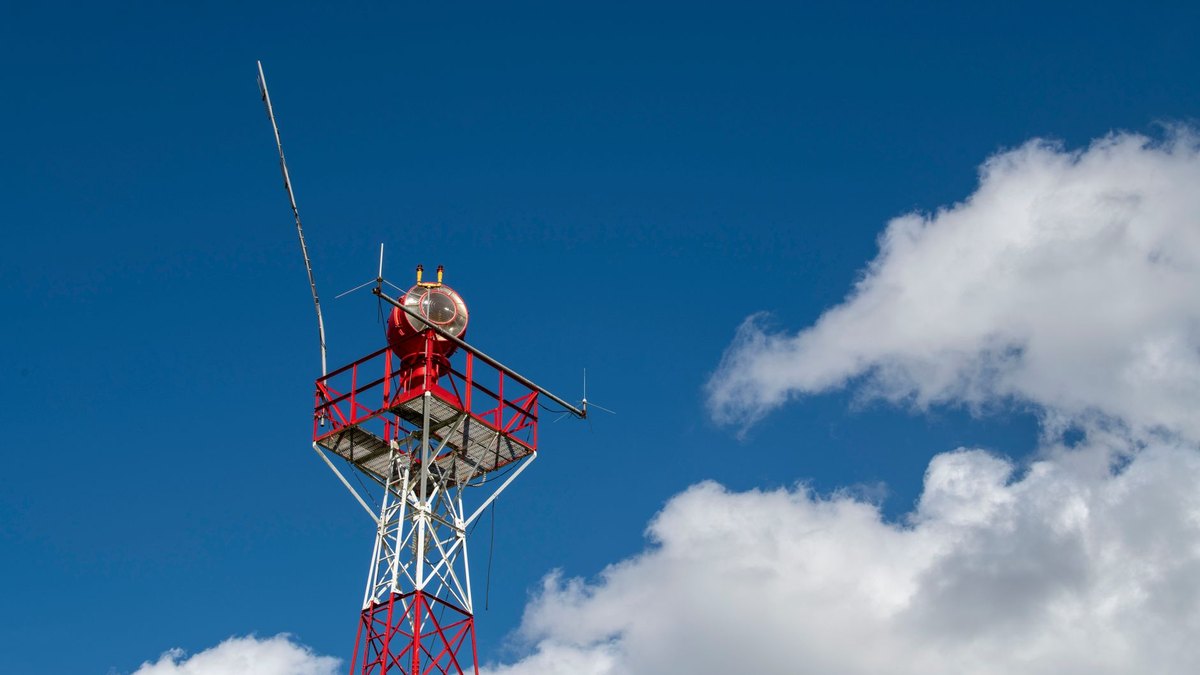
WGN escaped after 25 seconds because staffed engineers could switch to a backup frequency. WTTW's tower on the John Hancock Center had nobody there to intervene.
The investigation
The FCC and FBI both opened investigations. Broadcast signal intrusion is a federal offence, carrying substantial fines and potential imprisonment.
They had unusually good raw material to work with. The video and audio were recorded off-air by multiple viewers. The intrusion required specialised equipment. The pool of people with both the gear and the knowledge to do it was small, concentrated in the Chicago broadcast and radio-enthusiast community. And the perpetrators appeared to be young men who might reasonably be expected to talk.
None of it produced an arrest. The FCC's chief of field operations reportedly noted that catching this kind of intruder generally requires catching them in the act, since a mobile transmitter leaves no trace once it is switched off. The equipment could have been dismantled that night.
The case remains formally unsolved.
The theories
Broadcast insiders
The most widely held view is that the perpetrators worked in or around the industry — engineers, technicians, or students with access to equipment. The intrusion showed operational familiarity: which link to target, which station lacked staffing, how to align a dish accurately at night.
The hacker and phone-phreak subculture
Chicago had an active scene of radio hobbyists, phone phreaks, and early computer hackers. Multiple people over the years have claimed knowledge of who did it, or claimed to know someone who knew, but nothing has ever been substantiated.
Online reconstructions
In the 2010s, a long internet effort attempted to identify the culprits, focusing on specific individuals in that subculture based on personal accounts and analysis of the video's in-jokes. Some of the reasoning is genuinely interesting; none of it constitutes proof, and it has never resulted in charges. It is worth keeping the distinction clear between "a plausible internet theory" and "identified."
Why it still fascinates
Part of the appeal is aesthetic. The clip is genuinely unsettling in a way that is hard to reproduce deliberately: the flat lighting, the immobile rubber grin, the mechanical rocking, the buzzing distortion, the abrupt return to normal programming. It arrived in living rooms uninvited, and there was no explanation afterwards.
But the more interesting part is what it revealed. Broadcast television felt, in 1987, like something that simply happened to you — an authoritative stream from an institution. The intrusion demonstrated that the whole edifice rested on an unsecured microwave link and the assumption that nobody would bother.
There had been a precedent earlier that same year: in April 1987, someone calling themselves "Captain Midnight" — later identified as a satellite dealer named John MacDougall — had overridden HBO's satellite feed with a text message protesting subscription pricing. He was caught, fined, and placed on probation. The Chicago intruders appear to have learned the relevant lesson about not broadcasting from a fixed, traceable uplink.
What changed afterwards
The practical response was straightforward. Stations moved to secure their studio-transmitter links, adding encryption, authentication, and monitoring. The specific attack that worked in 1987 does not work on a modern digital broadcast chain.
The general principle, though, has not aged at all. Infrastructure built when nobody was attacking it tends to have no defence against the first person who tries — and the first person is rarely the last.
The short version
Two Chicago television stations were hijacked on the same night in November 1987 by someone in a Max Headroom mask, using unencrypted microwave links that broadcasters had never thought to secure. The FBI and FCC investigated, the video was recorded and analysed, the technical method is fully understood, and the pool of capable suspects was small.
Nobody was ever identified. Thirty-eight years later, the clearest thing about the case is still the footage itself.





Be the first to share a thought.