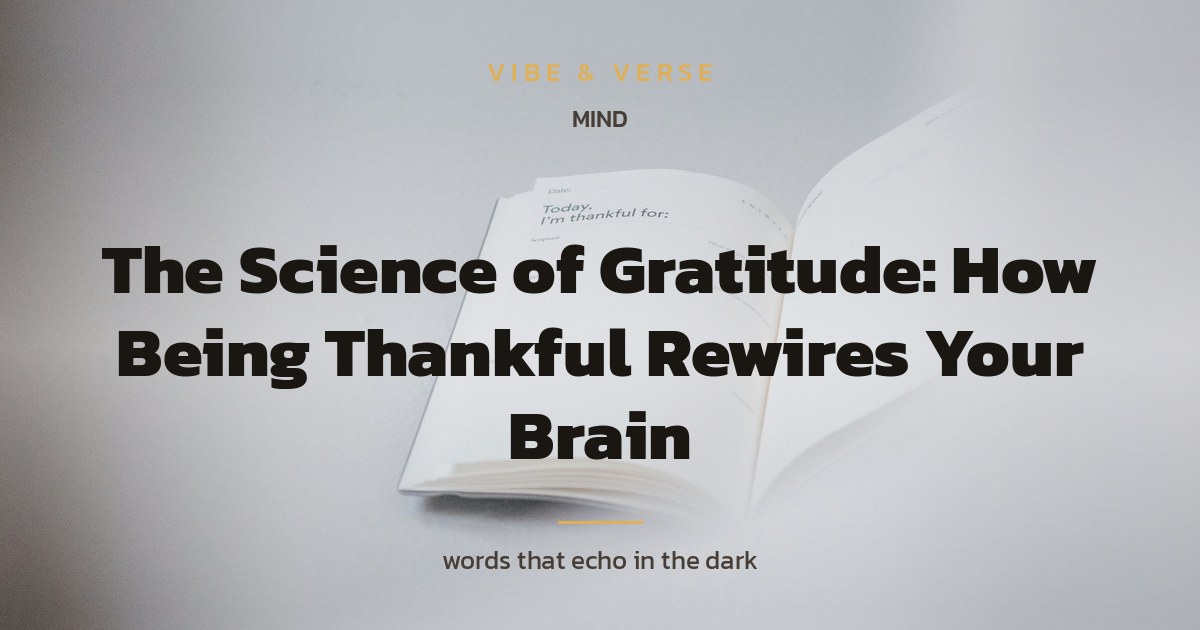
We often treat gratitude as a polite gesture — something we say out of habit rather than feel. But a growing body of research suggests that genuine, regular gratitude is one of the most powerful and underrated tools for a happier, healthier mind. It doesn't require money, talent, or special circumstances. It simply asks that we pay attention to the good things already present in our lives. Here's what science says about how gratitude works and why it matters.
What Gratitude Actually Does to the Brain
When you focus on something you're thankful for, your brain releases feel-good chemicals like dopamine and serotonin — the same ones targeted by many antidepressants. Practiced regularly, gratitude appears to strengthen the neural pathways associated with positive thinking. In a sense, you're training your brain to notice the good more easily, the way repeated exercise strengthens a muscle over time.
It Shifts Your Default Focus
The human brain has a natural negativity bias — we're wired to notice threats and problems more than blessings. Gratitude gently counteracts this. By deliberately looking for things to appreciate, you retrain your attention away from what's wrong and toward what's right. Over time, this shift becomes more automatic, and you start spotting reasons to be thankful without forcing it.
Gratitude and Better Relationships
Expressing appreciation to others strengthens social bonds. When you thank someone sincerely, it makes both of you feel more connected and valued. Studies show that couples and friends who regularly express gratitude report stronger, more satisfying relationships. A simple, specific "thank you" can do more for a relationship than we often realize.

The Physical Health Benefits
The effects of gratitude aren't only mental. Research links a regular gratitude practice to better sleep, lower stress, and even improved heart health. When your mind spends less time in stress and worry, your body benefits too. Grateful people also tend to take better care of themselves, creating a positive cycle of wellbeing.
How to Practice It Simply
You don't need an elaborate ritual. Try writing down three things you're grateful for each day, or take a moment before sleep to recall something good that happened. The key is specificity and consistency — "I'm grateful my friend called to check on me" works better than a vague "I'm grateful for my friends." Small, regular reflection matters more than occasional grand gestures.
Keeping It Genuine
Gratitude works best when it's real, not forced. It's not about denying problems or pretending everything is perfect — that can feel hollow. Instead, it's about holding space for the good alongside the difficult. On hard days, even finding one small thing to appreciate counts. The goal isn't toxic positivity but a more balanced, honest view of your life.
The Bottom Line
Gratitude is a simple practice with outsized effects. By regularly noticing what you're thankful for, you can lift your mood, strengthen your relationships, improve your health, and gradually rewire your brain to see more good in everyday life. It costs nothing and asks only for your attention. Start small tonight — name a few things that went right today, and let that quiet habit grow.


Be the first to share a thought.