Picture the Silk Road and you probably see a single ribbon of track winding from China to the Mediterranean, camel caravans plodding westward loaded with bolts of silk, the same merchants making the whole journey.
Almost none of that is accurate. There was no single route, most traders never travelled more than a fraction of the distance, and silk was one commodity among many. The term itself did not exist in any ancient language — it was coined in 1877 by the German geographer Ferdinand von Richthofen, some fourteen centuries after the network's classical heyday.
What actually existed was a shifting web of overlapping regional trade circuits, running across Central Asia and by sea around southern Asia, along which goods moved through many hands over long periods. Understanding it that way makes its real significance clearer.
A relay, not a journey
The defining feature of the network was that goods travelled far while people generally did not.
A bolt of silk leaving a Chinese workshop might be sold to a merchant who carried it as far as the Gansu Corridor. There it changed hands. The next trader carried it across the Tarim Basin to Kashgar. Another took it over the mountains to Samarkand or Bukhara. Another moved it to Persia, another to the Levant, and eventually a Mediterranean merchant sold it in Rome or Constantinople.
Each transaction added a margin, which is why silk that was ordinary cloth in China became an extravagant luxury in Rome. Roman writers complained bitterly about the drain of gold eastward for it. Pliny the Elder claimed the empire was haemorrhaging vast sums annually on Eastern luxuries — a figure historians treat as rhetorical rather than accounting, but the concern was real.
It also meant that the two ends of the network knew almost nothing accurate about each other. Roman geographers had a vague notion of a distant people called the Seres, the silk-makers. Chinese records described a western land called Daqin in terms partly drawn from hearsay. Direct diplomatic contact was attempted and repeatedly failed; the intermediaries had every commercial reason to keep the ends apart.
Many routes, constantly shifting
There was never a fixed path. Routes branched, merged and moved in response to politics, water availability, banditry and the rise and fall of oasis cities.
The northern land routes ran from Chang'an through the Gansu Corridor, then split to skirt the Taklamakan Desert either north or south, reconverging near Kashgar before crossing into the Ferghana Valley and on to Persia. The southern branch passed through the Hindu Kush towards India.
Maritime routes were at least as important and are consistently underweighted in the popular image. Ships moved between Chinese ports, Southeast Asia, Indian ports, the Persian Gulf and the Red Sea, using the monsoon winds. Sea transport carried bulk goods far more cheaply than camels ever could, and for many commodities and periods the sea carried the greater volume.
Steppe routes further north, controlled at various times by nomadic confederations, carried their own traffic and periodically dominated when southern routes became unsafe.
What actually moved
Silk was genuinely important, particularly early on. It was light, valuable by weight, durable in transport, and China held an effective monopoly on production for centuries — sericulture was a closely guarded secret, and the technique eventually leaked out through means that generated a small library of legends.
But the cargo lists were long and varied:
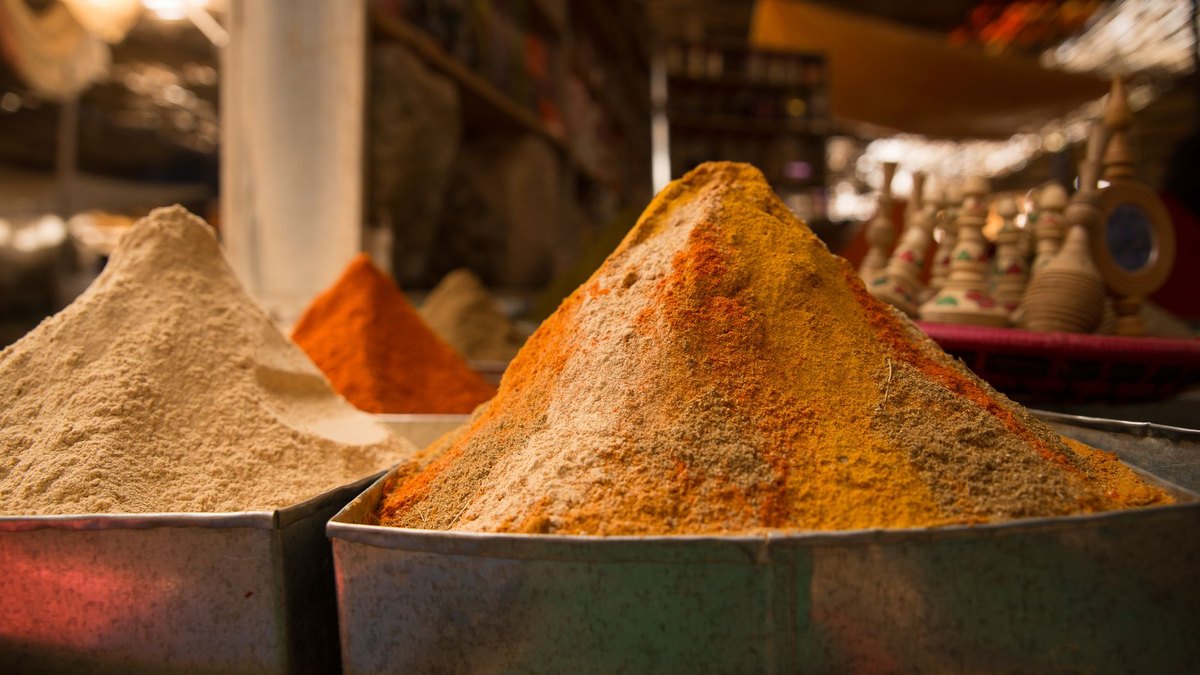
- **Westward from China** — silk, paper, ceramics, lacquerware, tea, bronze, rhubarb prized as medicine
- **Eastward to China** — horses (especially the prized Ferghana horses, an object of Chinese imperial obsession), glassware, wool textiles, gold and silver, gemstones, jade from Khotan
- **From India** — cotton, spices, pepper, precious stones, ivory
- **From Central Asia** — furs, livestock, dried fruit, slaves
- **From the Mediterranean and Middle East** — wine, olive oil, coral, frankincense and myrrh
Paper deserves particular mention. Chinese papermaking spread west along these routes, reaching the Islamic world by the eighth century and Europe considerably later. It was arguably a more consequential export than silk ever was.
The things that were not cargo
The network's deepest effects came from what travelled alongside the goods.
**Religions** moved with merchants. Buddhism spread from India into Central Asia and then into China largely along these routes, carried by traders and the monks who travelled with them, and it transformed East Asian civilisation. The cave complexes at Dunhuang and Bamiyan were products of this traffic. Later, Islam, Nestorian Christianity, Manichaeism and Zoroastrianism all moved along the same channels.
**Technologies and ideas** moved in both directions — papermaking, printing, gunpowder, the compass, silk production itself, glassmaking, mathematical concepts, astronomical knowledge, agricultural crops.
**Disease** moved too. The most consequential instance is the Black Death, which in the fourteenth century appears to have travelled westward along trade and military routes from Central Asia, reaching the Black Sea ports and then Europe by ship. The same connections that carried prosperity carried catastrophe with equal efficiency.
Who made it work
The network depended on intermediaries, and the most important were the **Sogdians** — an Iranian people centred on Samarkand and Bukhara who dominated Central Asian commerce for roughly a thousand years. Sogdian merchant communities established themselves in cities along the routes, maintaining family networks, contracts and correspondence across enormous distances. Their language became the commercial lingua franca of the region.
Oasis cities — Kashgar, Khotan, Turfan, Merv, Samarkand, Bukhara — were the essential infrastructure. Each was a point where caravans could water, rest, resupply, trade and be taxed. Their prosperity rose and fell with the routes, and several were eventually swallowed by the desert when water or traffic shifted.
Caravanserais, fortified roadside inns spaced roughly a day's travel apart, provided shelter and security. Some were state-built, some endowed by merchants or religious foundations.
Peaks and decline
Trade intensified whenever large stable empires secured long stretches of the routes and reduced the number of tolls and raiders. The Han dynasty's westward expansion in the second century BCE, the simultaneous flourishing of Han China and Rome, and the Tang dynasty's Central Asian reach were all high points.
The greatest single period of integration came under the Mongol Empire in the thirteenth and fourteenth centuries. Having conquered an enormous contiguous territory, the Mongols had strong incentives to protect commerce, and the resulting *Pax Mongolica* allowed travellers to cross the continent with unprecedented safety. This is the period that produced Marco Polo's account and a surge of direct European contact.
Decline came from several directions at once. The Mongol Empire fragmented. The Black Death devastated populations and disrupted commerce. Political consolidation in the Middle East raised barriers. And most decisively, European maritime expansion from the late fifteenth century created sea routes to Asia that bypassed the land intermediaries entirely, moving far greater volumes at far lower cost.
The land routes never vanished — regional trade continued — but they ceased to be the main artery between East and West.
Summary
The Silk Road was a nineteenth-century name for a first-millennium reality: a shifting web of land and sea routes across which goods passed through many hands rather than travelling with single merchants. Silk mattered, but so did horses, paper, spices and glass — and the most lasting exports were religions, technologies and, disastrously, disease. Its rise depended on empires large enough to make long-distance trade safe, and its decline came when European ships made the middlemen unnecessary.




Be the first to share a thought.