For most of the last century, exercise advice for older adults meant one thing: walk more, and be careful. Strength training was seen as something for athletes and young gym-goers. That view has quietly collapsed. A large body of research now points to muscle as one of the most important tissues for healthy aging — and to resistance training as one of the few interventions that reliably protects it.
What Happens to Muscle Over Time
From roughly the age of thirty, adults lose muscle mass gradually, and the loss accelerates after fifty. The process, called sarcopenia, is not just about size. Strength declines faster than mass does, and power — the ability to produce force quickly — declines faster still. Power is what you use to catch yourself when you stumble, which is why it matters far more than a number on a scale.
The decline is not inevitable at the rate most people experience it. A large portion of it comes from doing less rather than from aging itself. Muscle responds to demand at any age; studies of adults in their seventies, eighties, and beyond consistently show meaningful strength gains from resistance training.
Why It Matters Beyond Strength
**Bone density.** Loading your skeleton signals it to stay dense. Resistance training is one of the few things that slows bone loss, which is central to avoiding fractures later.
**Blood sugar control.** Muscle is where most of the glucose in your bloodstream gets stored. More muscle means more capacity to handle carbohydrates, and better insulin sensitivity.
**Metabolism.** Muscle is metabolically active tissue. Losing it makes weight management progressively harder over decades.
**Independence.** Getting off the floor, carrying groceries, climbing stairs, standing up from a low chair — these are strength tasks. When strength drops below the threshold they require, life narrows quickly.
**Balance and falls.** Falls are among the leading causes of serious injury in older adults, and leg strength is one of the strongest modifiable protective factors.
How to Start
**Two sessions a week is enough to begin.** More is fine, but two full-body sessions produce most of the benefit and are realistic to sustain.
**Cover the basic movement patterns.** A push (press-up against a wall or bench, or overhead press), a pull (row), a squat or sit-to-stand, a hinge (hip bridge or deadlift pattern), and a carry. That's a complete program.
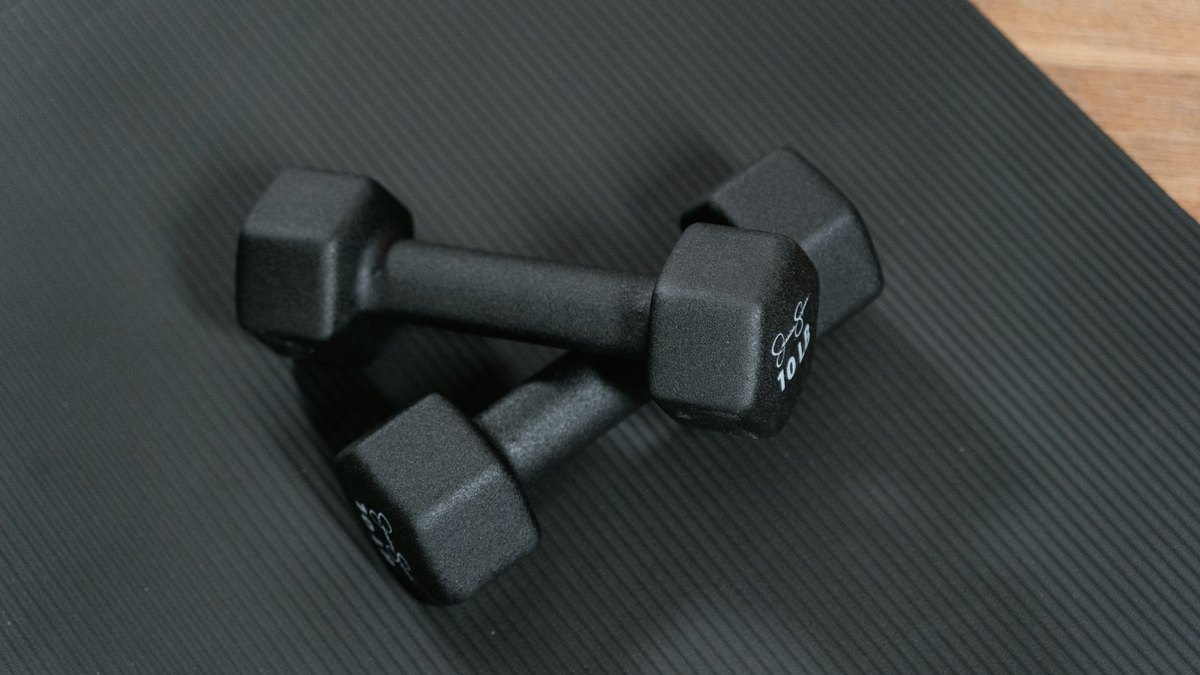
**Start lighter than you think you need to.** The first few weeks are about learning the movement, not testing your limits. Bodyweight and resistance bands are perfectly legitimate starting points.
**Progress gradually.** Add a little weight, a repetition, or a set when the current version feels manageable for all sets. Slow progression is what makes this sustainable for decades.
**Leave a couple of reps in reserve.** You don't need to train to failure to build strength, and stopping short reduces injury risk considerably.
**Rest between sets.** One to three minutes. Rushing turns a strength session into a poorly designed cardio session.
Common Concerns
*"Won't I get bulky?"* Building substantial muscle size requires years of dedicated effort, specific programming, and considerable food. What most people get instead is firmer, stronger, and more capable.
*"Isn't it dangerous at my age?"* Properly scaled resistance training has a strong safety record in older populations. The greater risk, statistically, is the frailty that comes from avoiding it.
*"I have arthritis or a bad back."* These are reasons to modify and get guidance, not to avoid loading entirely. Strengthening the muscles around a joint often reduces pain over time. Speak with a physiotherapist or doctor about which variations suit you.
Protein Matters Too
Training gives the signal; protein supplies the material. Older adults appear to need somewhat more protein than younger adults to get the same muscle-building response, and spreading it across meals works better than loading it all into dinner. Aim for a decent protein source at each meal rather than obsessing over exact grams.
The Bottom Line
Strength training is not about appearance, and it's not only for the young. It's about staying able — able to travel, to carry a grandchild, to get up unaided, to recover from an illness without losing your independence. Two sessions a week, started at any age and kept up, is one of the highest-return investments available in health. The best time to begin was decades ago. The second-best time is this week.
*This article is general information, not medical advice. If you have existing health conditions, check with a doctor before starting a new exercise program.*





Be the first to share a thought.