Few ingredients attract as much contradictory coverage as artificial sweeteners. In the same week you can read that they cause cancer, that they are the best tool available for cutting sugar, that they wreck your gut, and that they are entirely inert. The confusion is understandable — the research is genuinely messy — but it is not unresolvable. Here is what the evidence actually supports, and where honest uncertainty remains.
What They Are
Artificial or non-nutritive sweeteners are compounds that trigger sweet taste receptors while providing little or no energy. They are hundreds of times sweeter than sugar by weight, so the quantities used are tiny.
The common ones behave quite differently from one another, which is the first reason blanket statements go wrong. **Aspartame** is broken down into amino acids and methanol during digestion. **Sucralose** passes through mostly unabsorbed. **Saccharin**, the oldest, is excreted essentially unchanged. **Acesulfame K** is also excreted unchanged. **Stevia** and **monk fruit** extracts are plant-derived. **Sugar alcohols** such as erythritol and xylitol are a separate category — partially absorbed, providing some calories, and known for causing digestive upset in quantity.
Treating "sweeteners" as one substance is like treating "medicines" as one substance.
The Cancer Question
This is the fear that has followed sweeteners since the 1970s, and it deserves a direct answer.
The saccharin scare came from rat studies showing bladder tumours. The mechanism turned out to depend on a feature of rat urine chemistry that does not apply to humans, and saccharin was subsequently removed from carcinogen listings.
Aspartame returned to headlines when an international review classified it as "possibly carcinogenic to humans." That phrase caused enormous alarm, largely because the classification system is widely misunderstood. It describes the **strength of the evidence**, not the size of the risk, and the same category includes aloe vera extract and pickled vegetables. The accompanying assessment of actual risk left the acceptable daily intake unchanged — an amount corresponding to roughly a dozen or more cans of diet soft drink per day for an average adult, every day, for life.
The reasonable summary: decades of study have not produced convincing evidence that normal consumption causes cancer in humans, while the evidence linking excess sugar intake to serious disease is substantially stronger.
Weight and Appetite
Here the picture is genuinely more complicated.
Randomised trials — where people are assigned to replace sugary drinks with sweetened ones — generally show modest weight loss compared to continuing with sugar. That is the most reliable evidence available, and it supports sweeteners as a substitution tool.
But observational studies often show the opposite: people who consume more diet drinks tend to weigh more. The likely explanation is reverse causation. People switch to diet drinks *because* they are trying to lose weight, not the other way round. Untangling this is exactly what observational data cannot do.
A third possibility has been studied repeatedly: that sweet taste without calories confuses appetite regulation and drives compensatory eating. Some laboratory findings support a version of this; larger trials mostly do not show it translating into meaningful real-world weight gain. The honest position is that sweeteners help when they genuinely replace sugar, and do nothing if the calories return elsewhere.
A major health body's recent guidance advised against using non-sugar sweeteners for long-term weight control specifically — while explicitly noting the evidence was low-certainty, and not suggesting a return to sugar was preferable.
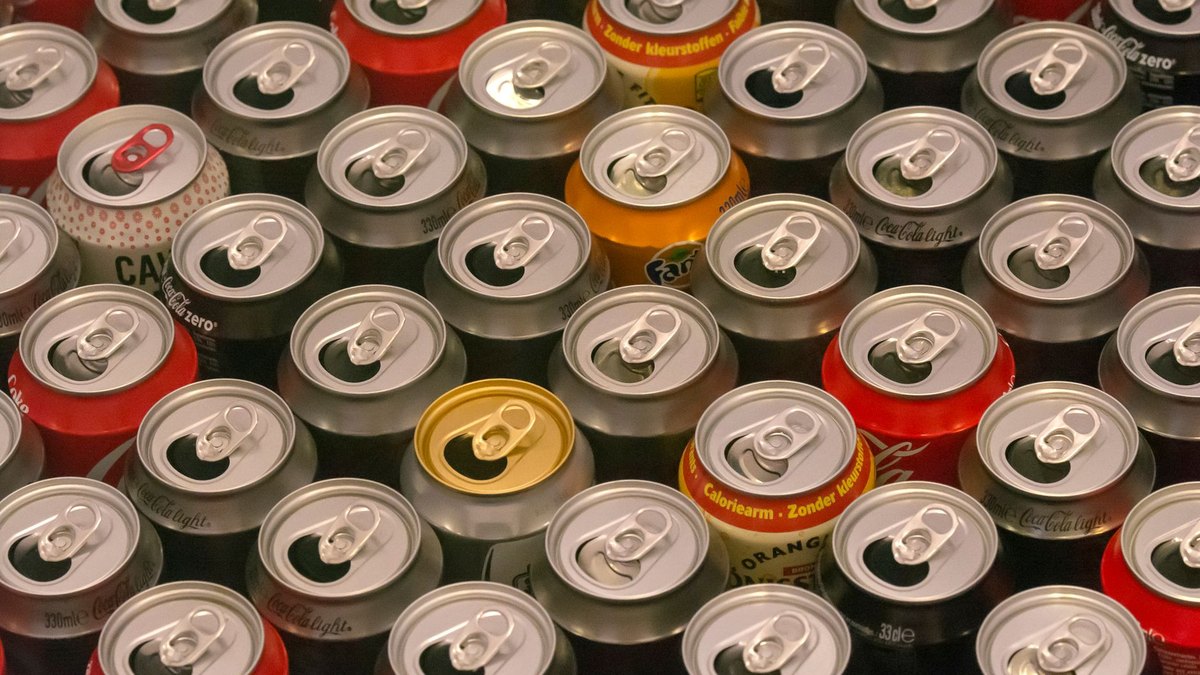
The Gut Microbiome
This is the most active area of current research and the one where genuine uncertainty is highest.
Some studies show that certain sweeteners alter gut bacterial composition, and small trials have found changes in glucose tolerance in some individuals but not others. The effects appear to vary by compound and by person.
What is not yet established is whether these changes matter clinically. A shift in bacterial populations is not automatically harmful, and the studies are mostly short and small. Anyone claiming certainty in either direction on this topic is ahead of the data.
Sugar Alcohols Are a Separate Story
Erythritol and xylitol deserve their own note. Their most reliable effect is digestive: because they are incompletely absorbed, larger amounts draw water into the intestine and ferment in the colon, causing bloating, gas, and diarrhoea. This is dose-dependent and varies enormously between people.
Erythritol has also drawn attention from research associating higher blood levels with cardiovascular events. Interpretation is complicated by the fact that the body produces erythritol internally, so high blood levels may partly reflect metabolic conditions rather than dietary intake. It is a live question rather than a settled finding.
One practical warning that is settled: **xylitol is severely toxic to dogs**, even in small amounts.
How to Think About It Practically
**If you currently drink a lot of sugary drinks,** switching to sweetened versions is very likely a net improvement. The evidence for harm from excess sugar is far stronger than the evidence for harm from sweeteners.
**If you drink water and eat mostly whole foods,** there is no reason to add sweeteners for their own sake.
**Variety reduces exposure to any single compound**, which is a sensible hedge given the remaining uncertainty.
**Treat sweeteners as a bridge, not a destination.** Their most useful role is reducing sugar while taste preferences adjust downward — and taste preferences do adjust, given a few weeks.
**Watch the wider product.** A biscuit sweetened with stevia is still a biscuit. "No added sugar" often accompanies plenty of refined flour and fat.
The Bottom Line
Artificial sweeteners are among the most heavily studied ingredients in the food supply, and the evidence does not support the alarming claims made about them at normal consumption levels. Nor do they earn the health-food framing some products imply. They are a tool with a narrow, real use: cutting sugar intake without giving up sweetness immediately. Used that way they help. Used as a reason to consume more sweet products overall, they miss the point entirely.



Be the first to share a thought.