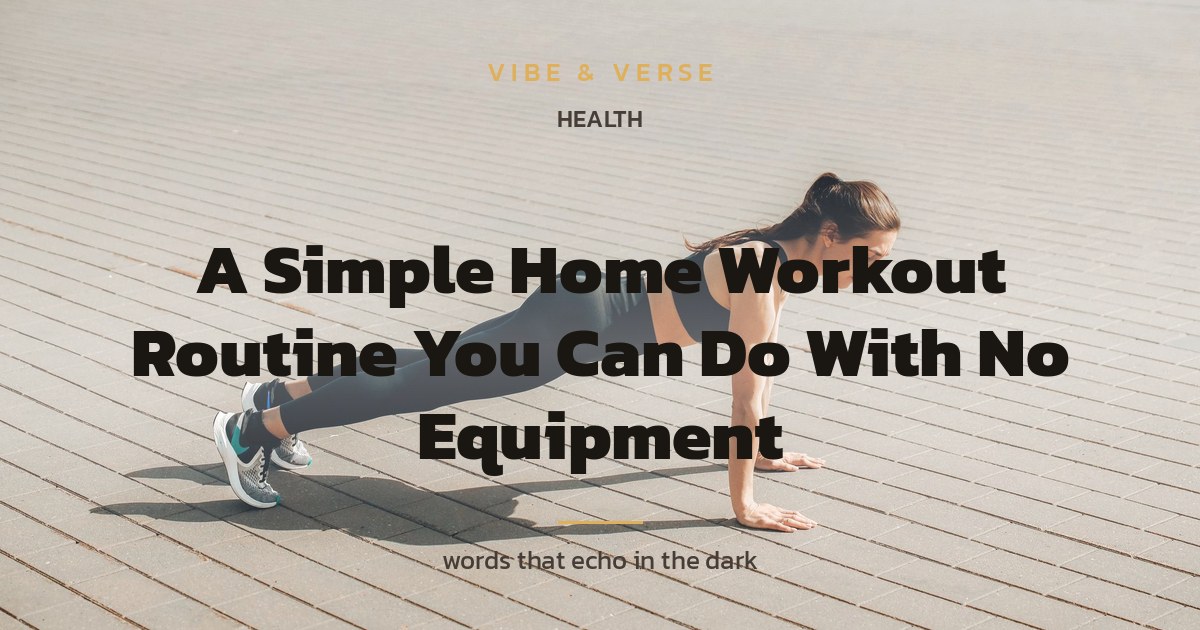
You don't need a gym membership or fancy equipment to get stronger and feel better. Your own bodyweight is a surprisingly effective tool, and a short routine at home removes almost every excuse — no commute, no cost, no waiting for machines. The hardest part is simply starting and staying consistent. Here's a simple, beginner-friendly home workout you can do in a small space with nothing but your body.
Why Bodyweight Training Works
Bodyweight exercises use your own weight as resistance, and that's more than enough to build real strength, especially when you're starting out. Movements like squats, push-ups, and lunges work multiple muscles at once and mirror how your body moves in daily life. Because there's no setup and no equipment, the biggest barrier — getting started — nearly disappears. Consistency, not equipment, is what drives results.
Always Warm Up First
Jumping straight into exercise with cold muscles invites injury. Spend five minutes warming up with light movement — marching in place, arm circles, gentle leg swings, and a few easy stretches. This raises your heart rate, loosens your joints, and prepares your body to work. A short warm-up makes the workout feel better and safer, and it's a habit worth never skipping.
The Core Movements
A balanced routine hits your main muscle groups. Squats work your legs and glutes. Push-ups — on your knees if needed — build your chest and arms. Lunges strengthen your legs and balance. A plank builds core stability. And glute bridges support your back and hips. Just these five movements cover your whole body. Do each for a set number of reps or seconds, rest, and repeat for two or three rounds.
Start Small and Build Up
The biggest mistake beginners make is doing too much on day one, ending up sore and discouraged. Start with a manageable number — maybe eight to ten reps of each move for two rounds — and focus on good form over quantity. As it gets easier, add reps or rounds. Progress should feel gradual. A routine you can sustain beats an intense one you abandon after a week.
Focus on Form, Not Speed
Doing an exercise correctly matters far more than doing it fast or doing a lot. Rushed, sloppy reps reduce the benefit and raise injury risk. Move with control, keep your core engaged, and pay attention to alignment — knees tracking over toes in squats, a straight line in your plank. Quality reps build strength safely, and good habits now prevent problems later.
Stay Consistent
Results come from showing up regularly, not from occasional heroic efforts. Aim for three short sessions a week to start — even fifteen to twenty minutes counts. Put it in your schedule like any other appointment. On days you don't feel like it, tell yourself you'll do just five minutes; you'll usually keep going. The routine works only if it becomes a habit.
The Takeaway
A simple home workout with no equipment is one of the easiest ways to get stronger and lift your energy. Warm up first, focus on a handful of core bodyweight movements, start small, prioritize form, and above all stay consistent. You don't need perfect conditions or fancy gear — just your body and a little space. Begin with a few short sessions a week, and let the habit grow from there.




Be the first to share a thought.