
Vitamin D has an unusual status among nutrients. It is the one your body can manufacture itself, given sunlight — and yet deficiency is one of the most commonly diagnosed nutritional problems in the world, including in countries that get plenty of sun. That combination confuses people, and it has made vitamin D a magnet for both genuine medical concern and considerable marketing hype. Here is what the evidence actually supports.
What Vitamin D Actually Does
Vitamin D is not really a vitamin in the classic sense. It behaves more like a hormone: your skin produces a precursor when exposed to ultraviolet B light, your liver and kidneys convert it into its active form, and receptors for it appear throughout the body.
Its best-established job is regulating calcium and phosphate. Without enough vitamin D, your gut absorbs only a fraction of the calcium you eat, which is why severe deficiency causes rickets in children and osteomalacia — soft, painful bones — in adults. Bone density and muscle function are the areas where the evidence is strongest and least disputed.
Vitamin D receptors also appear on immune cells, and deficiency is associated with a range of other conditions. But association is not the same as cause, and this is where public discussion tends to overreach. Many large trials of supplementation in people who were not deficient have produced disappointing results for outcomes like cancer prevention and heart disease. The honest summary is: correcting a deficiency clearly helps; taking large doses when you are already sufficient mostly does not.
Why Deficiency Is So Common
**Indoor lives.** The main reason is simple. Producing meaningful vitamin D requires bare skin exposed to direct UVB light, and most people now spend the majority of daylight hours inside. Glass blocks UVB almost entirely, so sitting by a sunny window produces essentially none.
**Latitude and season.** Above roughly 37 degrees of latitude, the sun sits too low in the sky during winter months for UVB to reach the ground in useful amounts. For several months a year, skin production effectively shuts down regardless of how long you stay outside.
**Sunscreen and covering up.** Sunscreen used properly blocks most UVB, which is precisely the point — it is protecting you from skin cancer. This is a genuine trade-off rather than a reason to skip sunscreen, and the answer is usually diet or supplements rather than more unprotected sun.
**Skin tone.** Melanin absorbs UV, which means people with darker skin need considerably longer exposure to produce the same amount of vitamin D. In high-latitude countries, deficiency rates among people with darker skin are consistently higher.
**Age.** Skin becomes less efficient at producing vitamin D as we get older, and older adults typically spend less time outdoors — a combination that matters most in the group most vulnerable to fractures.
**Body weight and gut conditions.** Vitamin D is fat-soluble and gets sequestered in fat tissue, so people with higher body fat often need more to reach the same blood level. Conditions affecting fat absorption, including coeliac and Crohn's disease, reduce uptake from food.
**Sunny countries are not exempt.** Deficiency is well documented across the Middle East and South and Southeast Asia, where heat drives people indoors during peak UVB hours and cultural dress may cover most skin.
Signs Worth Noticing
Mild deficiency often produces nothing obvious at all, which is why it goes undetected for years. When symptoms do appear they tend to be vague: persistent fatigue, muscle weakness, aching bones — particularly in the lower back, hips, and legs — frequent infections, and low mood.
Because these overlap with dozens of other conditions, self-diagnosis is unreliable. The only way to know is a blood test measuring 25-hydroxyvitamin D, which is inexpensive and widely available.
Where to Get It
**Sunlight.** For lighter skin at mid-latitudes in summer, something in the range of ten to thirty minutes of midday sun on arms and legs several times a week is often cited as sufficient. Darker skin needs substantially longer. Note that more exposure does not keep increasing production indefinitely — the body self-regulates — while skin cancer risk keeps rising, so deliberately burning has no upside.
**Food.** Very few foods contain much naturally. Oily fish — salmon, mackerel, sardines, herring — are by far the best source. Egg yolks, liver, and mushrooms exposed to UV contribute smaller amounts. Many countries fortify milk, cereals, or spreads, and in practice fortified food supplies a large share of dietary intake.
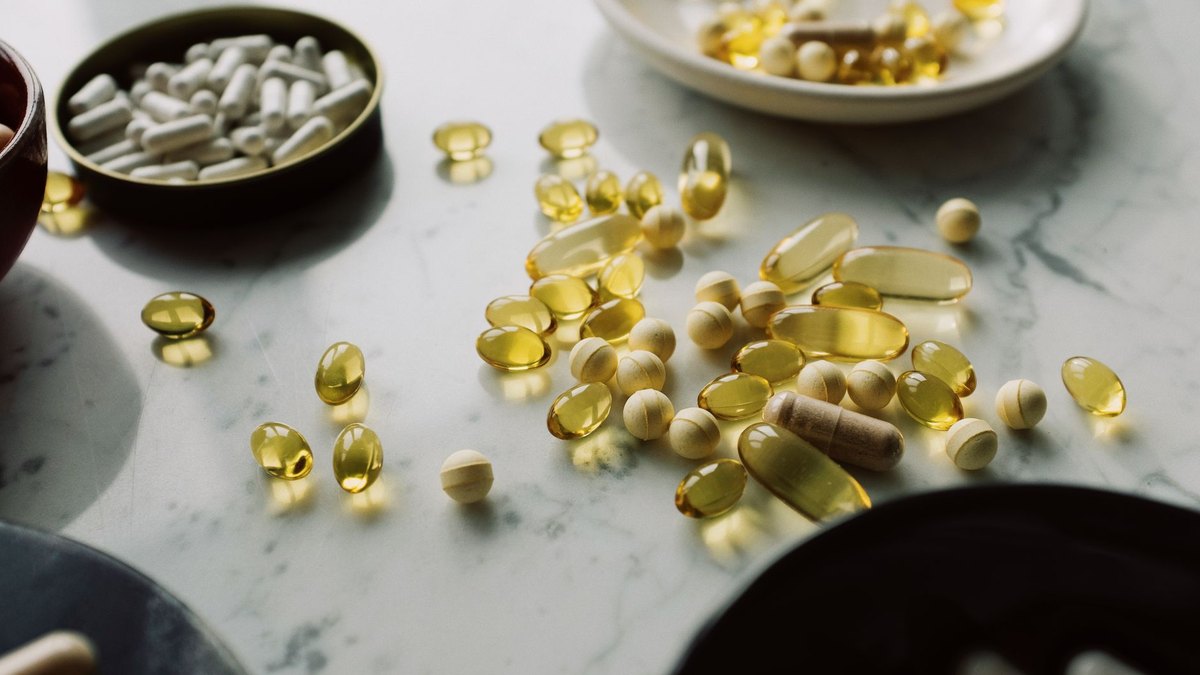
**Supplements.** For most people who are deficient, supplementation is the practical answer, particularly through winter. Vitamin D3 is generally better at raising blood levels than D2. Because it is fat-soluble, taking it with a meal containing some fat improves absorption.
Dosing Sensibly
Typical maintenance recommendations for adults fall in the range of 600 to 800 international units per day, with many bodies suggesting up to 1,000 to 2,000 IU for people at risk. Correcting a documented deficiency often requires higher doses for a limited period, and that is a decision for a doctor rather than a shelf label.
The important caution: unlike water-soluble vitamins, vitamin D can accumulate to harmful levels. Toxicity is rare and essentially never comes from sunlight or food — it comes from prolonged very high-dose supplementation. It causes dangerously elevated blood calcium, with nausea, confusion, kidney stones, and kidney damage. Very high doses are not a shortcut, and there is no benefit to pushing blood levels above the normal range.
The Bottom Line
Vitamin D deficiency is genuinely common, genuinely worth correcting, and genuinely oversold as a cure-all. If you spend most days indoors, live far from the equator, have darker skin, or are over sixty-five, you are in a higher-risk group and a blood test is worth requesting. If you are deficient, fixing it will likely help your bones, your muscles, and possibly your energy. If you are not deficient, taking more will not turn it into a performance enhancer. Test, correct, maintain — and treat anything promising more than that with scepticism.





Be the first to share a thought.