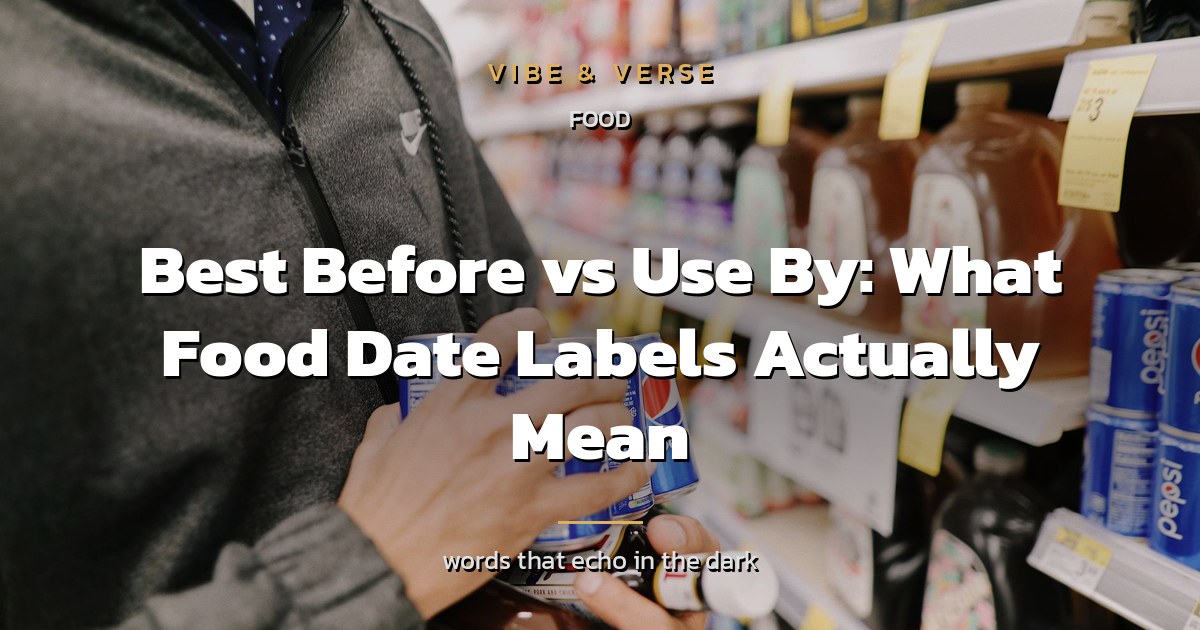
Surveys across several countries have found that confusion over date labels is one of the leading causes of household food waste, with a substantial share of consumers treating every printed date as a safety deadline.
It is not. The labels mean different things, and only one of them is about whether food might make you ill.
Use by: this one is about safety
A use by date appears on foods that support the growth of harmful bacteria — fresh meat, poultry, fish, ready meals, some dairy products, prepared salads.
It marks the last date on which the manufacturer considers the product safe to eat when stored as directed. After that point, dangerous bacteria may be present at levels sufficient to cause illness, and critically, those bacteria often produce no smell, no visible change and no off taste.
This is the important part: you cannot detect this by inspection. The listeria on a ready meal does not announce itself. Food that has passed its use by date should not be eaten, and should not be judged by how it looks or smells.
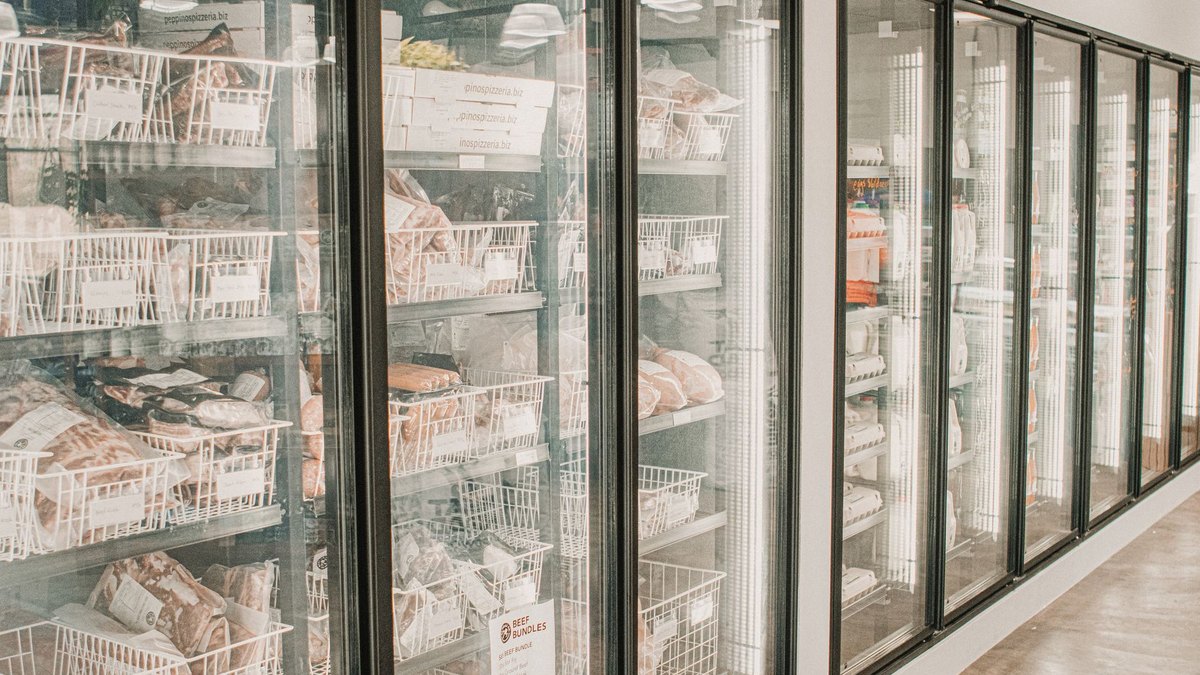
Freezing stops the clock. Food frozen before its use by date remains safe indefinitely from a bacterial standpoint, though quality declines. Once defrosted, it should be treated as needing to be used that day.
Best before: this one is about quality
A best before date — sometimes printed as best if used by — is a manufacturer's estimate of how long the product stays at peak quality. Texture, flavour, colour, crispness, nutritional content.
Past that date, the food is very often perfectly safe. It may be staler, softer, less vivid, or slightly less nutritious. That is the entire claim being made.
Dried pasta, rice, tinned goods, biscuits, crisps, flour, sugar, honey, spices, condiments and most shelf-stable products carry best before dates. Many remain usable for months or years afterwards.
Some products are extraordinarily stable. Honey does not spoil under normal conditions because of its low water content and acidity. Salt and sugar do not support microbial growth. Dried beans become harder to cook long before they become unsafe.
The other labels you will see
Sell by is inventory management for the retailer, not guidance for you. It indicates how long a shop should display the product, and typically leaves a deliberate margin of remaining shelf life at home.
Display until serves the same function.
Freeze by indicates the last date for freezing the product to preserve quality — not a safety limit for eating it fresh.
Neither sell by nor display until is aimed at consumers at all, and in some jurisdictions retailers have been dropping them precisely because shoppers were misreading them as safety dates.
How to judge food past its best before date
Since best before is about quality, your senses are the appropriate tool — the opposite of the use by situation.
Look for: visible mould, unusual colours, slime on the surface, bulging or leaking packaging, or a fermented, sour or rancid smell in something that should not have one.
Specific cases worth knowing:
- Eggs. Fresher eggs sink in water and lie flat; older ones tilt or float as the internal air cell grows. A floating egg is not automatically unsafe, but it is old. Crack any questionable egg into a separate bowl first.
- Dried herbs and spices. These lose potency rather than becoming unsafe. Old spices make weak food, not dangerous food.
- Cooking oils. These go rancid through oxidation. Rancid oil smells like crayons or old nuts and tastes bitter. It is unpleasant rather than acutely hazardous, but there is no reason to eat it.
- Hard cheese. Mould on a hard cheese can be cut away with a generous margin around and below it. Mould on soft cheese, yoghurt, bread or soft fruit means the whole item goes — the visible growth is only part of the network.
- Tinned food. Safe well past the date if the tin is intact. Discard any tin that is bulging, badly dented along a seam, rusted through, or that sprays when opened.
- Bread. Mould is the deciding factor, not the date. Do not cut mould off bread.
Why manufacturers set dates conservatively
Date labels are set by the producer, not by a regulator testing each product. There is a strong asymmetry in the incentives: a date set too late risks illness and liability, while a date set too early costs the manufacturer nothing and may increase repeat purchases.
Regulators in several countries have recognised that this asymmetry drives waste and have pushed for simplification — encouraging producers to drop best before dates from fresh produce entirely and to reduce the number of different label types in use.
Storing food so the dates mean something
All date labels assume proper storage, and most of them assume the package is unopened.
Keep your fridge at or below 5°C, and check it with a thermometer rather than trusting the dial. Keep the freezer at around minus 18°C.
Once a package is opened, the printed date frequently no longer applies. Follow the on-pack instruction — most commonly some version of use within three days of opening.
Store raw meat on the bottom shelf so nothing drips onto ready-to-eat food. Cool leftovers quickly and refrigerate within two hours, and use them within a few days.
Rotate stock: newly bought items go behind older ones. Most household waste is simply things forgotten at the back.
Summary
Use by is a safety limit. Do not eat past it, do not judge by smell, and freeze before it if you will not get to it in time.
Best before is a quality estimate. Past it, use your eyes and nose — a great deal of the food thrown away on that date is entirely fine.
Sell by and display until are messages to the shop, not to you.
The distinction takes thirty seconds to learn and probably saves the average household a meaningful sum every year, without taking any risk that the labels were actually there to prevent.


Be the first to share a thought.